

Plastics in Electronic Enclosures: Global Markets
December 01, 2011
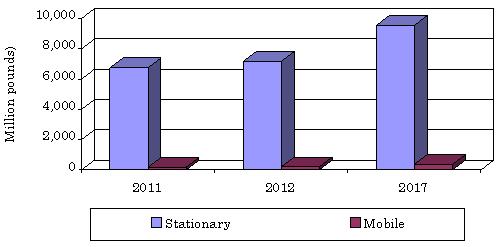
Wellesley, Mass. – In a recent release, PLASTICS IN ELECTRONIC ENCLOSURES: GLOBAL MARKETS (PLS048A) from BCC Research (www.bccresearch.com), the global production of plastics in electronic enclosures is projected to be nearly 7.4 billion pounds in 2012 and to reach 9.9 billion pounds in 2017, increasing at a compound annual growth rate (CAGR) of 6.1%.
The global market for plastics used in electronic enclosures can be broken down into two segments – stationary enclosures and mobile enclosures.
The segment made up of stationary enclosures is expected to amount to nearly 7.2 billion pounds in 2012, and should be at 9.5 billion pounds by the end of 2017, a CAGR of 5.9%.
The segment made up of mobile enclosures is projected to amount to 201 million pounds in 2012 and should reach 364.4 million pounds in 2017, a CAGR of 12.6%.
Electronic enclosures are cabinets for electronic equipment. These cabinets are designed to position, mount, and protect electronic circuitry, displays, switches, knobs, etc., and to prevent electrical shock to users. In addition, these enclosures are developed to be visually attractive to users. Typically, the enclosures can be made suitable for office and light industrial environments.
Some significant changes within the electronic enclosures industry include the shift of desktop computers to notebooks, with the shift to smaller versions called “netbooks,” and the explosion of the cell phone market, which includes upgrades such as iPhones, smart phones, and the BlackBerry. MP3 players, such as iPods, bring music to the world. Tablets such as the popular iPad, along with electronic books, or “e-books,” have been the most recently introduced products in this industry.
This surge of new electronic products has resulted in significant changes in resin selection for enclosures. Downsizing and thin walling have necessitated a reevaluation of resins because of more demanding physical-property requirements and molding challenges. In addition, a reevaluation is also necessary for resins used in the stationary portion of the market, which includes enclosures for desktop computers and flat-panel displays.
Due to many factors such as these, the electronic enclosures market will continue to see solid growth over the next five years. This is mainly because of the continuing growth of electronic displays within the stationary sector, which is expected to become a more mature market segment later in this decade. The continuing rapid growth of the mobile sector will have minimal impact on the overall electronic enclosure market since it constitutes less than 5% of the total volume.

Plastics in Electronic Enclosures: Global Markets( PLS048A )
Publish Date: Jan 2012
Data and analysis extracted from this press release must be accompanied by a statement identifying BCC Research LLC as the source and publisher. For media inquiries, email press@bccresearch.com or visit www.bccresearch.com/media to request access to our library of market research.
BCC Library Membership Benefits
Unlimited Access to Market Research Reports for Academic Institutions and Corporations.
Custom Research
Tailored solutions across industries for your unique business needs.
More in Plastics
- CO₂-Based Plastics Market to Grow at 27.8% CAGR Through 2030
- Polymeric Foams Market to Hit $197.8 Billion by 2030
- 2024 Packaging Research Review: Trends That Will Shape the Future
- Global Bioplastics Market Accelerates Toward 5,634.6 Kilotons by 2029
- Global Composites Market to Reach $183.1 Billion by 2029
Reports from Plastics
Recent News
- Materials Industry Sees $216 Billion in Strategic Investments as AI Infrastructure Drives Next-Generation Material Innovation
- Chemical Specialty Markets to Exceed $485 Billion by 2030, Driven by EV Production and Fire Safety Regulations
- Global Flexible PCB Market to Nearly Double, Reaching $41.7 Billion by 2030 on Surging Demand from Consumer Electronics, EVs and 5G Infrastructure
- Global Ion Exchange Materials Market to Reach $5.9 Billion by 2030, Driven by Green Hydrogen, Water Treatment Standards and Energy Security Demands
- Global Bio-Based Surfactants Market Valued at $18.8 Billion, Projected to Reach $27.3 Billion by 2030 as ESG Mandates and Consumer Demand Reshape the Chemicals Sector