Acute respiratory distress syndrome (ARDS) is a critical health condition that affects patients who need intensive care. The development of ARDS occurs through fluid accumulation that blocks the small elastic lung sacs known as alveoli. The presence of fluid in the lungs prevents proper lung expansion, leading to insufficient oxygen delivery through the bloodstream. ARDS develops from two distinct categories of lung injury: direct lung damage and indirect lung damage. The direct lung injuries that lead to ARDS development include pneumonia, aspiration and trauma. The indirect lung injuries that cause ARDS develop from pancreatitis, inflammation, sepsis, blood transfusions, burns, and drug side effects.
The U.S. reports 200,000 annual cases of ARDS, while the increasing tobacco and smoking among teenagers and adults globally may cause a substantial increase in the number of affected patients in the current scenario. The condition exists in 10% to 15% of ICU patients and 23% of ventilated patients, implying its common occurrence in critical care units. The absence of approved ARDS treatments, along with its 40% mortality rate, creates an immediate need for enhanced respiratory care solutions. The increasing number of cases alongside the intricate management requirements of ARDS will create substantial market demand for sophisticated treatment solutions, including specialized respiratory equipment, specific medications and enhanced critical care facilities.
Current ARDS Treatment Methods:
Device-Based Treatment: ARDS is usually treated with ventilator support, humidifiers, nebulizers, oxygen concentrators and respiratory humidification. The rise in investment by various companies for the commercialization and development of medical devices is propelling the growth of the devices used for ARDS treatment. For instance, in 2023, Telesair closed a total of $22 million in Series A round financing led by Pasaca Capital and others. The round of funding will support the commercialization of Telesair’s Bonhawa Respiratory Humidifier. Medical staff use the humidifier, a specialized respiratory treatment system in intensive care units. Getinge introduced Servo-c as its new mechanical ventilator in 2023, which provides lung-protective therapeutic options for treating pediatric and adult patients. Servo-c represents a goal for Getinge to extend healthcare access and affordability to additional hospitals.
Drug Therapies as Critical Adjuncts:
ARDS treatment involves the use of five main drug categories.
- The combination of inhaled nitric oxide with prostaglandins, including epoprostenol and iloprost, works as a vasodilator to enhance oxygenation while decreasing pulmonary vascular resistance without triggering systemic side effects.
- The combination of albuterol, salmeterol and formoterol bronchodilators relaxes airway muscles to enhance airflow. Patients receive these medications through nebulizers.
- The anti-inflammatory properties of corticosteroids, including methylprednisolone, hydrocortisone and dexamethasone, work to minimize lung tissue destruction, which results in superior treatment outcomes. The immunomodulatory properties of specific antibiotic drugs are activated in patients who develop ARDS.
- The combination of sedatives with neuromuscular blockers, including ketamine, midazolam and pancuronium, enables improved ventilator synchronization while reducing oxygen consumption and making mechanical ventilation more straightforward.
- The application of pulmonary surfactants helps restore lung surfactant layers, which results in enhanced oxygenation and stable alveoli. The treatment of neonatal and COVID-19-related ARDS patients is most effective when using these medications.
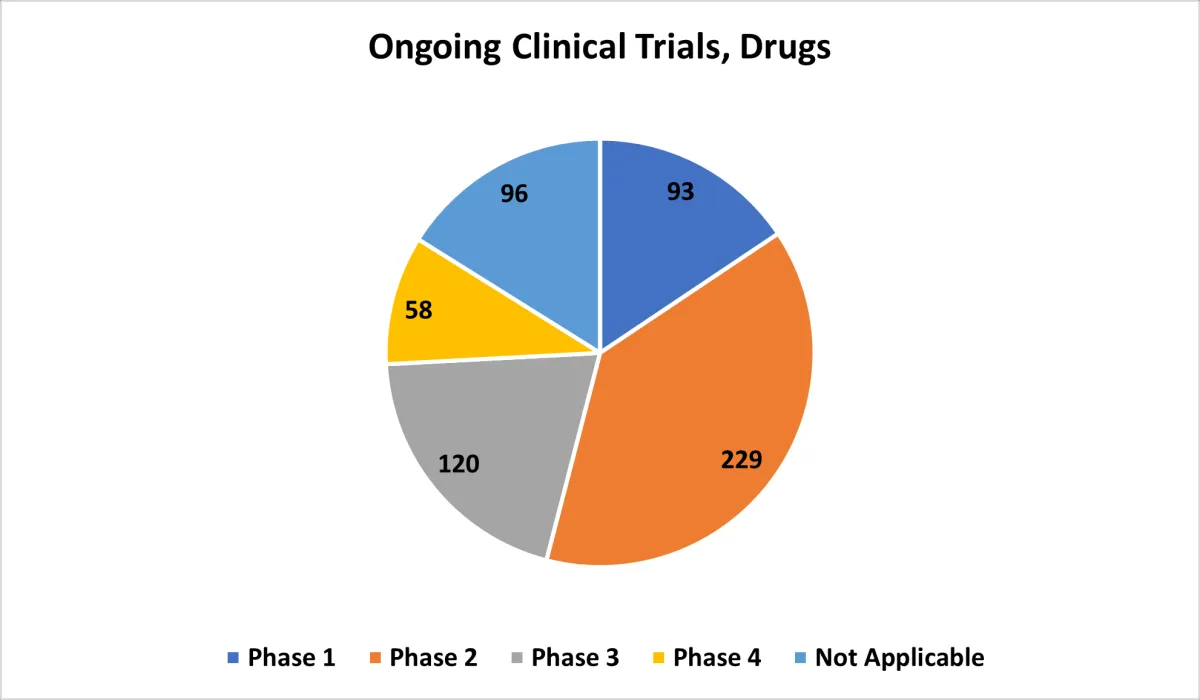
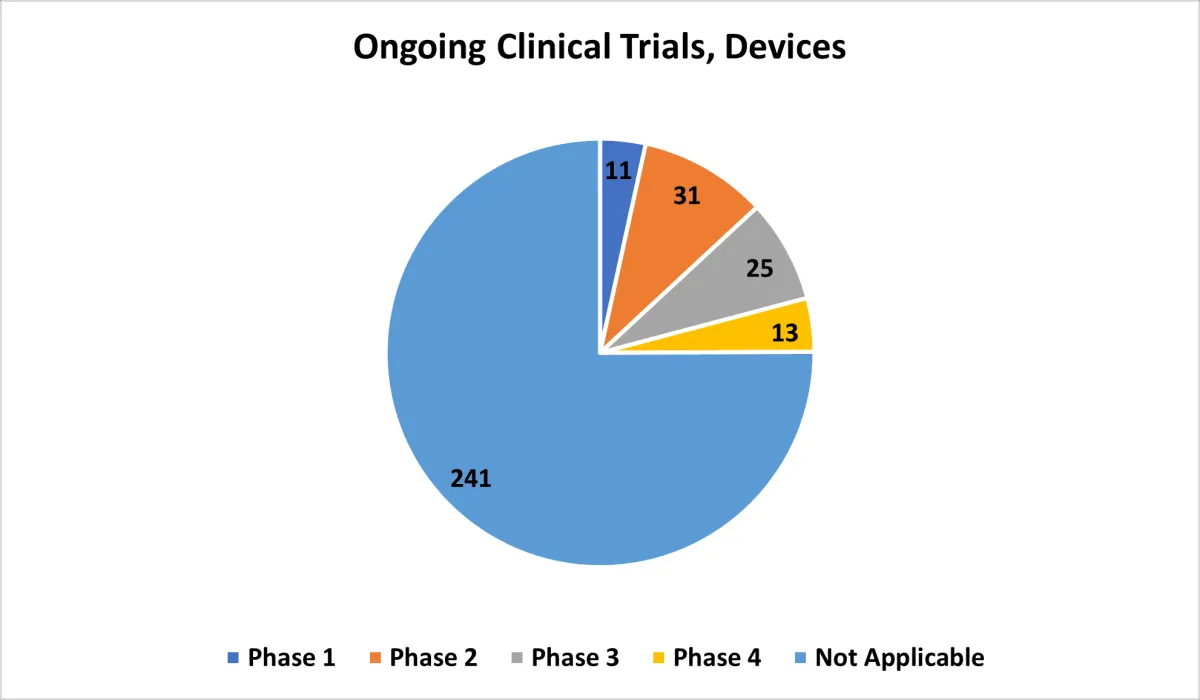
The current clinical research aims to build stronger evidence for these drugs, along with devices, to develop additional treatments. The Fayoum University runs a phase 2 clinical trial to evaluate the treatment outcomes of patients with ARDS who receive equivalent doses of methylprednisolone, dexamethasone and hydrocortisone. The research will enroll 300 patients in Egypt during the study period. The Boston Children’s Hospital will conduct an observational study that will monitor 1,260 pediatric patients with moderate-to-severe ARDS and receive mechanical ventilation and inhaled Nitric Oxide at various centers. The study is expected to finish by the end of 2028.
Source: ClinicalTrials.gov, October 2025
Need deeper insight for your specific market?
BCC Research can tailor custom research by region, application, technology segment,
competitor set, customer group, or investment priority.
Discuss a Custom Research Need
Some Interventions Under Clinical Trial
|
Sponsor
|
Intervention
|
Description
|
|
Edesa Biotech
|
Paridiprubart
(EB05)
|
EB05 is a
monoclonal antibody.
In July 2025,
Edesa Biotech is conducting a phase 2 trial for paridiprubart (EB05), an
experimental drug, in hospitalized patients with acute respiratory distress
syndrome (ARDS) from various causes.
The company is also
planning to file an Investigational New Drug (IND) application for
paridiprubart.
Paridiprubart
blocks Toll-like receptor-4 signaling to dampen dysregulated innate
immune/cytokine responses in ARDS.
|
|
BioAegis
Therapeutics
|
Drug: Rhu-pGSN
|
Phase 2, multi-centre enrolment.
Rhu-pGSN: replenishes plasma gelsolin to scavenge extracellular actin,
modulate inflammation, and aid pathogen clearance, being tested for pneumonia
or other illnesses causing moderate-to-severe acute respiratory distress
syndrome.
|
|
AVM
Biotechnology
|
Drug: AVM0703
|
Currently in Phase
1.
Evaluate the
safety and tolerability of a single dose of AVM0703 in patients with
moderate, severe, or immediately life-threatening ARDS due to COVID-19 or
Influenza (A or B) infection.
AVM0703
mobilizes endogenous bispecific γδ NKT-like cells (AVM-NKT); a “supercharged”
dexamethasone formulation reported to trigger rapid AVM-NKT appearance.
|
|
GEn1E
Lifesciences
|
Drug: GEn-1124
|
Enrolling patients for a Phase 2 study
for ARDS at multiple U.S. locations
The Biomedical Advanced Research and
Development Authority (BARDA) awarded GEn1E Lifesciences a contract in Q4
2023 to assist in the development of the company's innovative ARDS treatment.
p38α:MK2 pathway signal modulator
(dual/parallel modulation) designed to inhibit the pro-inflammatory MK2 arm
while sparing anti-inflammatory MSK1/2.
|
|
Toray Industries Inc
|
Device: NOA-001
|
The trial is
currently enrolling patients in Japan to evaluate the safety and efficacy of
the device for treating patients with ARDS.
The device does
a hemoperfusion adsorption column targeting circulating cytokines and
activated neutrophils to reduce inflammatory lung injury in ARDS.
|
|
Hospital
Civil de Guadalajara (México)
|
Device: Airway pressure release
ventilation (APRV)
|
Patients are being recruited for the APRV
General Electric Healthcare Engstrom ventilator system.
It is an open-lung ventilatory device designed for alveolar
recruitment and oxygenation, utilizing sustained high CPAP with brief
releases, while supporting spontaneous breathing.
|
|
University
Hospital, Germany
|
Device: Extracorporeal
Membrane Oxygenation, ECMO
|
Multicenter
trial
The treatment
method known as extracorporeal gas exchange performs oxygenation and CO₂
removal to support patients with severe respiratory failure while allowing
lung-rest ventilation strategies in ARDS.
|
Future Outlook
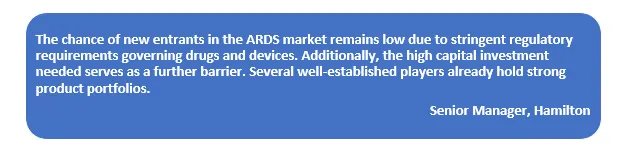
ARDS is a devastating respiratory condition with a very high mortality rate, and no FDA-approved drug. Hence, it remains a high unmet medical need with strong market potential. Major companies, such as Genentech and InflaRx, are active in this space, indicating rising competitive and commercial interest. Several observational and interventional trials of drugs and respiratory support devices are ongoing by firms in this sector to evaluate the efficacy in ARDS treatment. Many companies are in their pre-clinical stage of drug development. For example, RS BioTherapeutic’s metal-coordinated cannabinoid complex, RSBT-001, is a first-in-class, multi-targeted immune modulator for the treatment of a broad range of respiratory diseases characterized by pulmonary inflammation, like ARDS. The market for acute respiratory syndrome is anticipated to grow over the next five to seven years due to the increasing R&D efforts by both public and private entities to create sophisticated diagnostic tests, devices and medications, as well as the introduction and approval of these products.
Conclusion:
ARDS represents a severe medical emergency that damages lung function; therefore, an immediate diagnosis is necessary to prevent respiratory collapse and restore oxygenation in the patient. The current treatment approach for ARDS includes respiratory support equipment, along with specific medications that aim to stabilize the patient, reduce inflammation, decrease airway resistance, and mitigate lung tissue damage. The pipeline landscape is also expanding, with both device and drug candidates in clinical development. The clinical trials currently assess paridiprubart (EB05), Rhu-pGSN, AVM0703, and GEn-1124 as potential treatments. The global research on APRV ventilator systems and ECMO devices continues as scientists work to develop new treatments. The treatment landscape advances through combination-based approaches because of public and private research funding from the Biomedical Advanced Research and Development Authority (BARDA).