

Biodegradable Phone Cases: A Sustainable Shift in Mobile Protection
Clear insight into competitor positioning and market share.
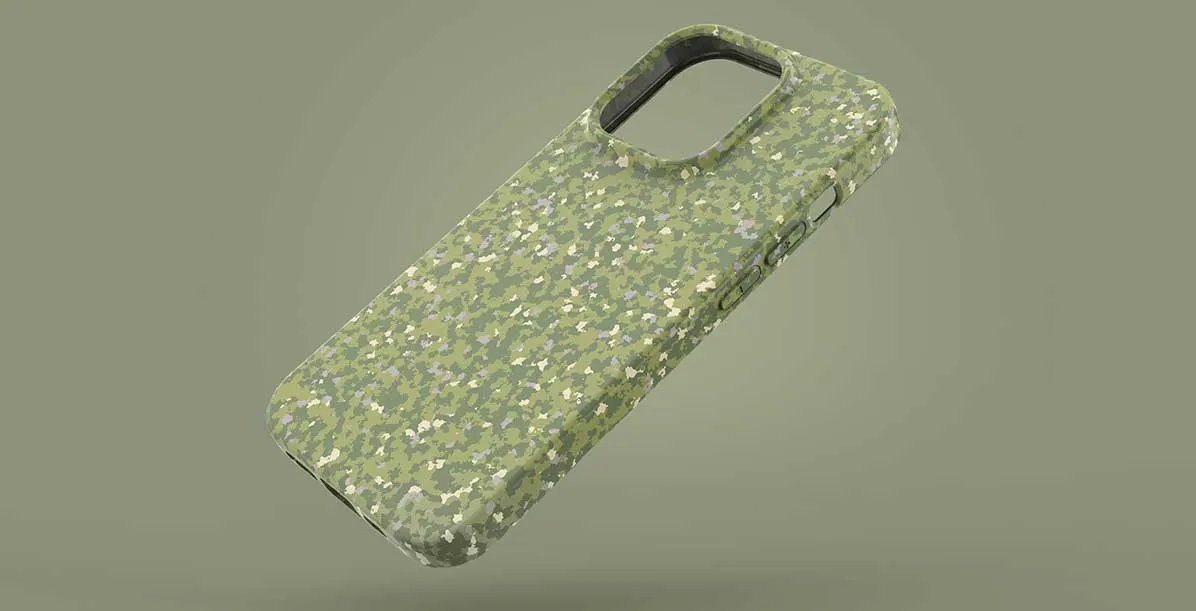
Biodegradable phone cases represent a compelling intersection of consumer electronics, materials science and sustainable design. These substitutes are designed to break down harmless elements under specific circumstances, in contrast to conventional plastic cases that can last for centuries. Manufacturers can balance sustainability, strength and aesthetics through developments in biopolymers, natural fibers and compostable composites. This trend is being accelerated by rising consumer demand for eco-friendly accessories and regulatory pressure on plastic waste. Despite these advances, challenges persist in striking a balance between durability, cost and true biodegradability under real-world conditions. Innovative materials, adaptive degradation mechanisms, and alignment with certification frameworks and circular systems will be central to future development.
Why Biodegradable Phone Cases are Gaining Traction?
- Environmental Pressure and Consumer Sentiment: Customers are becoming more conscious of microplastics, plastic waste and the lifespan of their devices. Offering eco-friendly accessories helps you stand out in a crowded market.
- Regulatory and Policy Incentives: Some jurisdictions have policies that require extended producer responsibility or discourage the use of single-use plastics. Manufacturers of electronics accessories can comply with these regulations by using biodegradable phone cases.
- Advances in Biopolymers and Natural Fibers: Improvements in polylactic acid (PLA), polyhydroxyalkanoate (PHA), cellulose derivatives, natural fiber reinforcements and biodegradable blends are pushing material performance upward.
- Circular Design Ecosystems: Brands increase their credibility by implementing take-back programs, composting partnerships and closed-loop initiatives that support genuine sustainability and conscientious product lifecycle management.
- Minimal Downside for Consumers: When performance factors such as fit and drop protection are comparable, transitioning from a traditional plastic case to a biodegradable one is relatively easy for users, making it a sustainable improvement rather than a major change.
Evolution of Phone Cases toward Biodegradability
Source: BCC Research
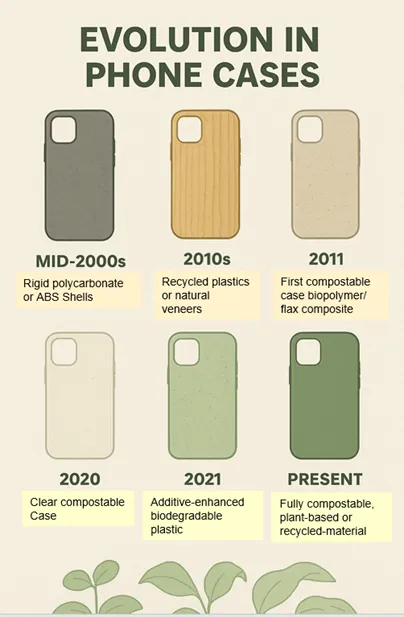
In the mid-2000s, smartphone cases were primarily made up of rigid polycarbonate or acrylonitrile butadiene styrene (ABS) shells. These were later complemented by flexible silicone or gel wraps, all of which were non-biodegradable. The incorporation of natural veneers, such as wood and bamboo, or recycled plastics as decorative overlays gained popularity in the 2010s to minimize environmental impact.
A significant development occurred in 2011 when Pela, a sustainable phone case manufacturer, introduced one of its first compostable phone cases. That was based on a biopolymer or flax composite. Further advanced versions emerged over the following ten years. For instance, Pela introduced a clear compostable case in 2020. In 2021, startups such as Pivet launched additive-enhanced "biodegradable" plastics (Toto-Toa), claiming accelerated multi-year degradation even in less ideal waste conditions. Moreover, current companies are offering phone covers made from fully compostable, plant-based or recycled materials.
Key Developments by Industry Players
- In October 2025, Pela launched the Pela × Whitney Nettles Artist Series, which featured colorful, nature-inspired artwork on completely compostable phone cases.
- In September 2025, Hamee launched its latest stylish and sophisticated smartphone case collections for the iPhone 17 series. These collections combine elegant design, superior protection and eco-conscious materials that reflect the brand’s ongoing commitment to sustainable style.
- In December 2024, a Swedish startup named 15:21 developed sustainable tech accessories. The company has designed and created phone cases using cork sourced from oak trees in Portugal.
- Major companies such as WaveCase, Incipio Organicore and other sustainable tech innovators are actively advancing biodegradable phone case designs using eco-friendly materials. These brands blend artistic and functional innovation to meet the growing demand for environmentally responsible accessories.
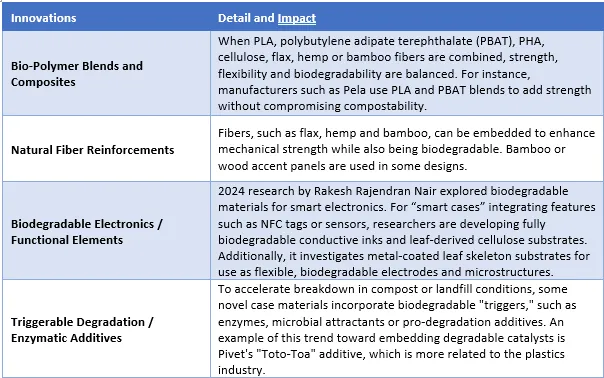
Key Technological Innovations and Trends
Source: Agood company, Cornell University (arXiv), and Condé Nast (WIRED)
Forces Accelerating Interest in Biodegradable Phone Cases
Source: BCC Research
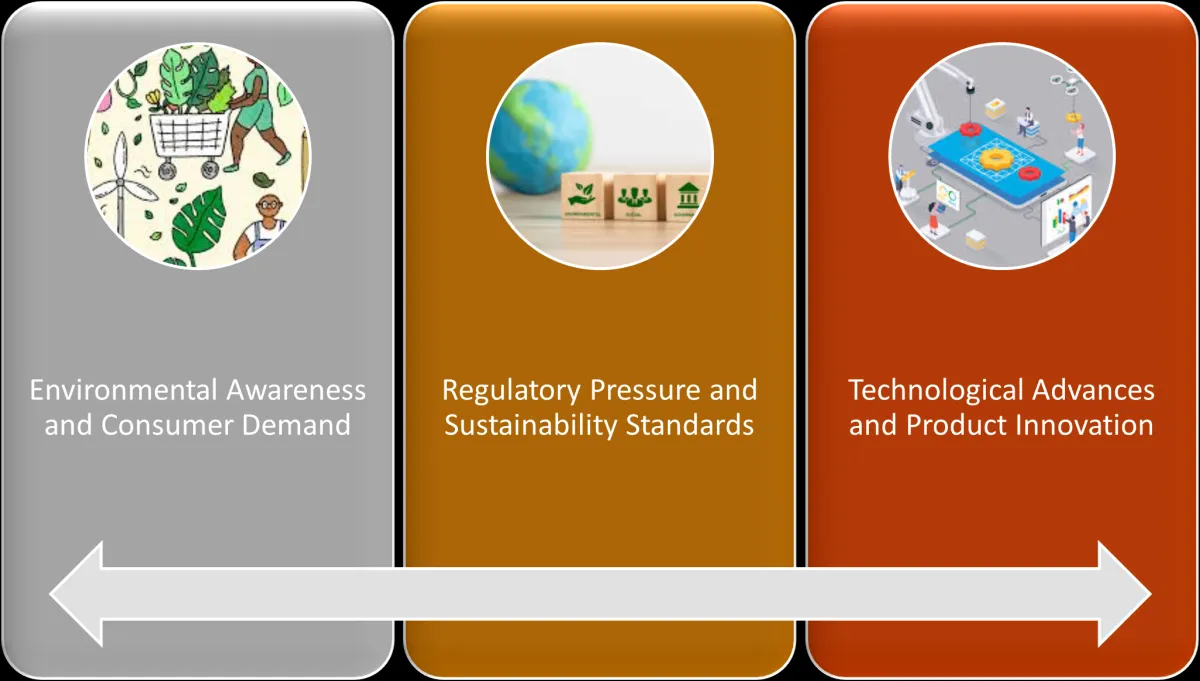
Growing consumer demand for sustainable, low-impact accessories and increasing environmental consciousness are the primary factors driving interest in biodegradable phone cases. Brands are prioritizing eco-compliant materials and circular design, driven by sustainability standards and regulatory pressure. These standards encompass EPR policies and certifications, including ASTM D6400 and EN 13432. In the meantime, durability and biodegradability are being enhanced through product innovation and technological advances in biopolymers, enzymatic additives and fiber-reinforced composites. All these factors working together are turning biodegradable phone cases from specialized eco-products into popular, ethical substitutes in the global market for smartphone accessories.
Key Challenges in the Adoption
Durability vs. Degradability Tradeoff
- Everyday wear and tear, including drops, scratches, UV rays, oils and humidity, must be endured by biodegradable materials. Durability and biodegradability must be carefully balanced, though, because they need to decompose efficiently in compost conditions.
- For example, over the past two years, users have complained that Pela's Flaxstic cases, which are composed of flax shive and a plant-based biopolymer, may eventually show wear. This highlights the continuous challenges of maintaining a balance between biodegradability and durability.
Cost and Manufacturing Complexity
- Biodegradable materials and composite fabrication can be more expensive and less mature than standard polymers. Scaling production without defects is challenging, leading to higher costs for consumers.
- For instance, MMORE's handcrafted organic cases, introduced in 2023, are made from natural materials such as lavender and alpine hay. As these cases are handmade, they are both more expensive to produce and more premium to buy.
Future Outlook
The adoption of eco-friendly and biodegradable phone cases is expected to increase over the next two to three years, driven by partnerships, innovation and consumer demand for sustainable products. The trajectory of this expansion is evident from significant developments, such as Pela's July 2025 "Katie Waiyu Artist Series," which features limited-edition, biodegradable designs. Similarly, Samsung's Eco-Friends line, introduced in February 2024, showcases extensive use of recycled materials, while Otter Products' January 2024 launch of OtterBusiness signals growth into business-to-business solutions.
Moreover, material innovations such as new bio-polymer blends, hybrid composites and enzymatic additives will enhance durability while maintaining product compostability. Similarly, clear labelling and certifications, such as "marine degradable" or "verified compostable," will help build customer trust in the product in future.
Conclusion
The adoption of biodegradable phone cases is growing as design, technology and sustainability come together. These products provide a competitive alternative to traditional plastics, driven by advances in biopolymers, natural fibers and triggerable degradation technologies. In addition, growing consumer awareness and regulatory pressure are accelerating their adoption. While there are still issues with achieving a balance between cost, durability and practical biodegradability. However, material research, initiatives to support the circular economy, and integration with smart electronics provide prospects for enhancing functionality and environmental impact. Moreover, biodegradable phone cases are expected to become a popular and environmentally responsible option in the market for electronic accessories over the coming years, driven by increased adoption, strategic partnerships and certification requirements.
Need deeper insight for your specific market?
BCC Research can tailor custom research by region, application, technology segment, competitor set, customer group, or investment priority.
Discuss a Custom Research Need