

Bioelectronic Medicine: Growing Interest in Nerve Stimulation Treatments
Expert guidance to accelerate your market and strategy decisions.
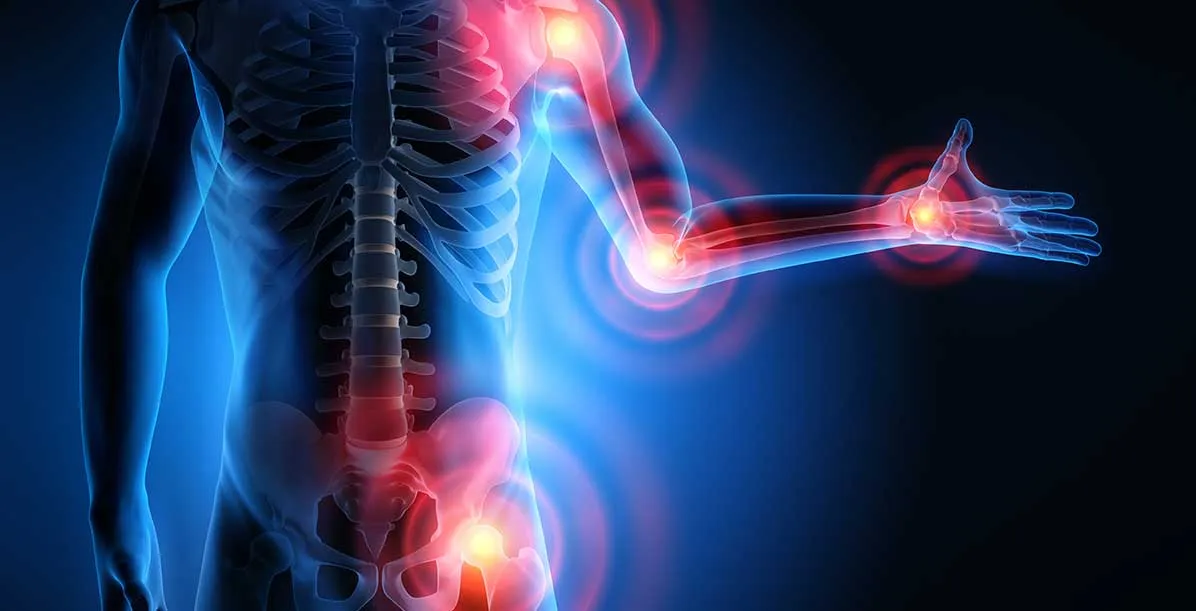
For years, people believed that there was a pill for every condition. However, contrary to the usual pattern, our bodies have always spoken a different dialect. It is not a language of substances but of electric signals, millions of tiny impulses that control cardiac function and the rhythm of respiration and ensure that every cell is synchronized.
The truth is, our nerves have been constantly giving us small hints, yet we have long neglected these signals. Bioelectronic medicine marks a new era that doesn’t cure with chemicals but through communication. It doesn’t use blood, but rather, very gentle electricity through the nerves controlling pain, inflammation and mood, giving the body a lesson on how to revive the accustomed flow.
How It Works: Listening to the Signals of the Body
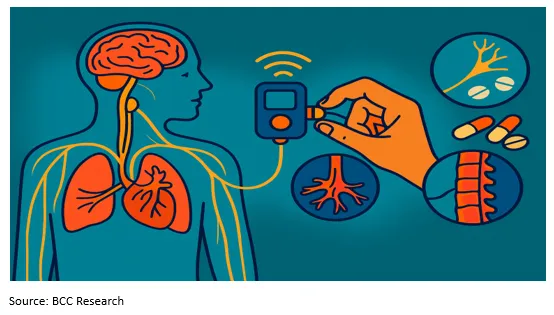
The brain sends signals to the heart, lungs, intestines and immune system through a very close network of nerves. In case a malfunction occurs in this communication, it is likely that a disease will follow. Bioelectronic medicine involves either implanting very small devices in the body or externally wearing devices that send a gentle electrical signal to certain nerve paths, such as the vagus nerve. It is the most prominent nerve path in our body and has the maximum number of connections between the brain and the other organs. By stimulating the vagus nerve, one can achieve a reduction in inflammation, mood control and pacification of the heartbeat, among other benefits. Other machines attach themselves to the spinal cord to stop the nerve signals of pain before they can get to the brain or the peripheral nerves, thereby restoring lost movement and sensation after an injury.
These methods are the body’s own language. Antidotes and bioelectronic medicine are in different leagues. Drugs are a force from outside attempting to mold the biological system. However, bioelectronic medicine works internally and is thus more efficient in converting digital pulses into biological signals that the body recognizes.
Where Are We now?
In medical facilities, vagus nerve stimulators are aiding patients with epilepsy and depression, whereas miniature spinal implants are preventing pain signals from going to the brain. Such devices do not decrease symptom visibility; instead, they alter the body's electrical frequencies. These are no longer in experimental stages—small and accurately adjusted devices, which are an integral part of the standard care and help the body to revert to its initial condition, are now being used.
Big medtech companies and startups are hustling to make these systems more compact, enlightened and wearable, like those that are worn around the neck to calm the inflammation and earbuds that help to relax by generating gentle nerve pulses in a specific location of the body to relieve anxiety. For instance, in September 2025, the University of California, Santa Cruz, developed "a-Heal," an innovative wearable smart bandage that features AI as its core, combined with bioelectronics, machine intelligence and a micro-camera for the observation of the wound and the delivery of accurate remedies. This smart bandage accelerated the wound-healing process by 25% in preclinical studies.
The market for bioelectronic medicine, extending beyond the confines of laboratory facilities, is still in a stage of rapid growth. Industry analysts claim that the sector is driven by such innovations as neurostimulation, AI-based diagnostics and the advent of minuscule implants. North America is still leading the way, propelled by early regulatory approvals and well-established research programs. However, Europe and the Asia-Pacific are two regions where there are considerable changes in the investments of translational medicine and academic-industry partnerships. Besides, the market is expanding its boundaries beyond the central nervous system and pain disorders to the cardiovascular, immune and regenerative therapies.
The Promise and the Challenge
For the first time, treatment feels almost invisible—no pills, no side effects, just quiet correction. Any innovation, including bioelectronic medicine, goes through a learning curve. So, even with its promise, it still faces some issues related to access, affordability and knowledge. Apart from the technological aspects, trust remains a challenge.
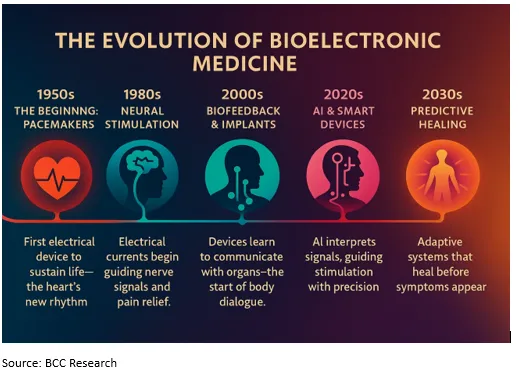
Nevertheless, these obstacles are part of every medical revolution. Pacemakers were initially doubted, like any other technology, but now they are saving millions of lives. As bioelectronic therapies become smaller, smarter and intuitive, they will likely be on the same track from skepticism to trust. The true potential of this area lies not only in the creation of new gadgets but also in a lifestyle change—one that views the interaction between human and technology as natural as that between doctors and patients.
Robust partnerships and well-thought-out strategic investments have been the main factors in moving the industry to the next level. Medtech multinational companies are seeking the collaboration of AI startups and university laboratories for the purpose of creating closed-loop systems—devices that can stimulate the nerves automatically and instantly. These types of therapies are being slowly rolled out by the public and private healthcare organizations in the U.S. and Europe as part of their chronic disease management systems. For Instance, in April 2024, Medtronic collaborated with Twin Cities Pain Clinic to develop and clinically validate Inceptiv. The company provided device design, algorithms and trial assistance, while the clinic performed feasibility studies, patient enrolment and real-world testing.
Future Outlook: The Road Ahead
Bioelectronic medicine is stunning for its amazing simplicity. It uses the life-giving invisible forces that govern our bodies—the electrical impulses in our nerves—to cure us. The concept of treatment will soon undergo a revamp—rather than providing prescriptions, doctors may start to program a series of electrical pulses. Instead of side effects, a patient may experience a slight vibration and a natural sense of relief. Recovery might be more akin to reconnection than intervention.
This new area of science and technology may lead a long way from pain and inflammation. Researchers are conducting studies on nerve-based therapies for diabetes, asthma, memory disorders, etc. Just think of the devices that could stimulate the brain circuits to enhance memory, regulate the digestive system, and relax the heartbeat in a stressful situation. Bioelectronic medicine may still become integrated with wearable technology, such as bracelets, earbuds, or skin patches, offering customized nerve stimulation in a discreet way throughout the day.
Following the rapid curriculum innovations, bioelectronic healthcare is being redefined by new trends. What started as a simple mixture of AI, neuroengineering and digital health has resulted in the birth of adaptive, self-learning devices that could interact with the body in real time. Companies are turning to invasion-free stimulation devices, along with some monitoring instruments, that would be cloud-compatible, thereby achieving uninterrupted interaction between doctors and patients.
These signify a shift from reactive healthcare toward predictive healthcare, that is, the era of treatment facilitating the onset of symptoms rather than their alleviation. Future medicine is this mutually beneficial partnership where nature and technology merge to restore health together.
Conclusion
For now, pills remain the most popular prescription worldwide. However, the increasing success of bioelectronic medicine indicates that a silent revolution is already underway within our bodies. From the pacemaker that keeps our heart at a normal pace to the stimulator that aims to calm our inflamed digestive tract, electric signals will pave the way for neurostimulation treatments.
Pharmaceuticals will not disappear, but their function will be modified. In the far-off future, the doctor's prescription pad may have one or two lines: one for medicine and the other for nerve modulation parameters.