

Grid Modernization Market
Forecast-backed insights for confident investment decisions.

Grid modernization is the process of updating and adding new technology to improve the efficiency and resilience of the grid. This procedure involves substituting obsolete facilities with smart sensors and communication systems, enabling two-way flow of electricity and data, real-time monitoring, and immediate response to interruptions. Grid modernization encompasses the integration of new energy generation and storage forms, improvements or extension of existing infrastructure, and deployment of smart technologies. Deployment of smart technologies incorporates sensors, AI-driven analytics and automation to improve grid operations, enabling real-time monitoring and management of demand among utilities and customers. Infrastructure improvements include physical and digital enhancements to fundamental components such as transmission lines, substations and cybersecurity measures for increasing capacity, minimizing losses and maintaining resilience during times of disruptions. The key aspects of grid modernization process are described in the figure.
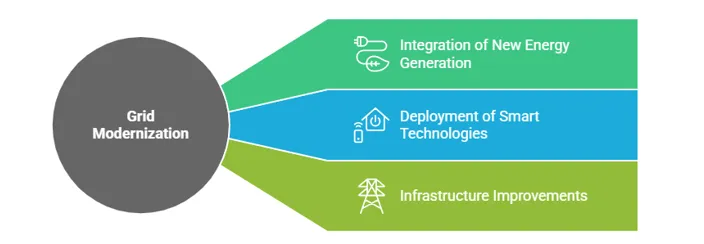
Figure 1: Grid modernization process
Advantages of Grid Modernization:
Some of the major advantages of grid modernization are as follows:
Reduced Outages: Grid modernization helps improve infrastructure with weatherproof materials, sensors and predictive analytics to minimize disturbances from storms, floods or severe temperatures. The impact of severe weather and the duration and frequency of power outages could be substantially reduced by combining modern technology with electronic controls that interact and communicate.
Faster Restoration After Outages: Grid modernization enables quicker service restoration during outages. Automated technologies such as self-healing grids and real-time monitoring separate faults and reroute electricity, facilitating rapid recovery from outages without requiring considerable human intervention.
Enhanced Threat Protection: Grid modernization includes technology such as self-healing grids, microgrids and improved surveillance to isolate and restore electricity during unexpected incidents. It also offers cybersecurity protocols, physical obstacles and evaluation to safeguard against cyber assaults and ecological threats, preserving grid reliability in the event of growing cyber threats.
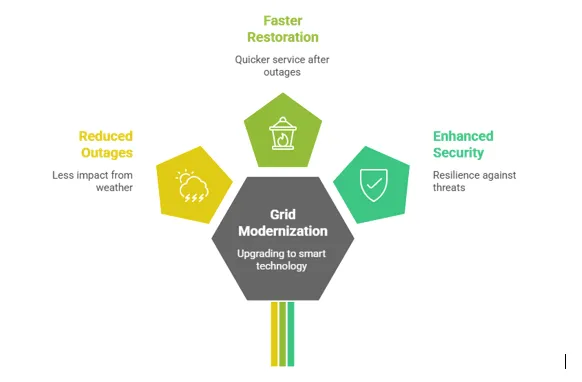
Figure 2: Advantages of Grid Modernization
Grid Modernization Action
In Q1 2025, the 47 U.S. states, including the District of Columbia and Puerto Rico, implemented 362 policies and deployments related to grid modernization, energy storage, microgrids, utility business model and rate reform, and demand response. The table below summarizes the state and utility actions in these areas. Of the 362 recorded, the most common were deployments (91), policies (76), and utility business model and rate reforms (60). These grid modernization actions in Q1 2025 show a significant national effort for a more reliable, flexible and effective power grid. Widespread installations, regulatory measures and utility changes are expected to propel the grid modernization market growth in the U.S.
|
Type of Action |
Total no. of Actions |
Percentage Share by Type |
No. of States |
|
Deployment |
91 |
25 |
35 + District of Columbia, Puerto Rico |
|
Policies |
76 |
21 |
28 + District of Columbia, Puerto Rico |
|
Business Model and Rate Reform |
60 |
17 |
32 + Puerto Rico |
|
Financial Incentives |
50 |
14 |
26 + District of Columbia |
|
Planning and Market Access |
50 |
14 |
24 + District of Columbia |
|
Studies and Investigations |
35 |
10 |
19 + District of Columbia |
|
Total |
362 |
100 |
47 States + District of Columbia, Puerto Rico |
Note: The number of states/districts is not the sum of the rows because some states have multiple actions. Percentages are rounded and may not total exactly 100%.
Source: NC Clean Energy Technology Center
Drivers and Restraints
Rising renewable integration, electrification loads, the need for resilience in extreme weather conditions, policy funding and digitalization through Internet of Things (IoT) and automation are bolstering the grid modernization market growth. Also, the push for decarbonization and the integration of distributed energy resources (DERs), such as rooftop solar, battery storage and electric vehicles, is pushing the demand for more adaptable and flexible grid technologies.
However, challenges such as cybersecurity threats, along with the lack of qualified workers, are expected to hinder the growth of the grid modernization market. The integration of digital technologies, smart meters and related devices poses a severe cybersecurity risk, including hacks and system disruptions. Additionally, an acute shortage of qualified workers, such as engineers, grid operators and IT professionals with expertise in smart grid technologies, poses a challenge, since complicated infrastructure and systems need highly skilled employees for installation, operation and maintenance.
Key Manufacturers
The key manufacturers operating in the grid modernization market include GE Vernova, Siemens, Schneider Electric, Survalent Technology Corp., Hitachi Energy, Oracle, IBM, Itron, Landis+Gyr, and Aspen Technology.
Recent Grid Modernization Developments:
The ASEAN Power Grid Financing Initiative (APGF), which was introduced in October 2025 by the World Bank and the Asian Development Bank (ADB), aims to propel growth as well as integration of national power grids across Southeast Asia. In addition to other clean energy projects, the ADB is investing about $10 billion to finance regional grids connected to the initiative. This initiative will accelerate the adoption of advanced digital and smart-grid technologies across the region, fund large-scale expansions, and promote cross-border grid integration, thereby contributing to the development of the grid modernization market.
In October 2025, a Statement of Intent (SoI) was signed by the Global Energy Alliance for People and Planet (GEAPP) and Maharashtra State Electricity Distribution Company Limited (MSEDCL). This aims to modernize the state's power distribution system using advanced analytics, digitalization, AI/ML technologies, battery energy storage systems (BESS) and improved integration of distributed renewable energy resources. By generating demand for digital infrastructure, storage options and smart grid technologies, this initiative is expected to propel growth in the grid modernization market.
Future Outlook
The global power grid is projected to experience notable growth in the coming years, thereby offering ample opportunities for the grid modernization market to expand. For instance, according to the Inner City Fund and the National Electrical Manufacturers Association (NEMA), the North American power grid is expected to experience significant growth in the coming years. By 2030, the U.S. demand for power grid capacity is expected to increase by 25%, and by 2050, it is projected to rise by 50%. Demand is expected to rise substantially in certain areas, such as the mid-Atlantic and Texas. This is due to the rise of data centers that power the artificial intelligence arms race and cryptocurrency mining, as well as the emergence of new factories and electric vehicles. According to the Canada Energy Regulator (CER), Canada has similar growth drivers and is expected to grow even faster than the U.S. (on a percentage basis) through 2050, with estimates ranging from 55% to 117% growth.
Conclusion
Globally, the aging energy grid is under high stress due to the increasing demand for electricity from industrial growth, data centers and electric vehicles. Advanced technologies, such as smart grids and digital substations, can help modernize infrastructure, enhance efficiency and ensure grid reliability in the coming years. Utilities are increasingly required to employ digital solutions alongside physical advances to enhance the reliability and sophistication of their systems. Advanced technologies within smart grid operations, such as dynamic line rating and distributed energy resource management systems (DERMS) combining distributed generation, real-time monitoring and flexible load management, are gaining market attention. Thus, the overall grid modernization market is likely to benefit from the surge in investments by utilities, governments and manufacturers in digital and automation technologies aimed at creating a more renewable, intelligent and reliable energy system capable of addressing electrica