

The Future of Microbiome-Based Therapies
Tailored research built around your exact strategic priorities.

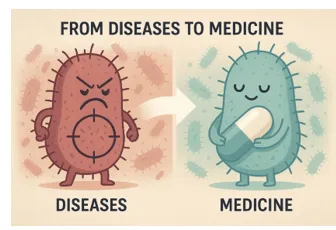
Earlier, the leading causes of diseases were bacteria, tiny living organisms that had to be eradicated at all costs. However, these small creatures are now causing a significant shift in the field of medicine. Bacteria will be the scientific heroes of tomorrow. Since these are being genetically modified, kept in carriers that have been carefully made, and employed as medications. Eventually, the organisms that we once feared are becoming our most powerful helpers.
The journey of these microorganisms from being known as invaders to being treated as healers is one of the most fascinating stories in biomedicine today. The field of medicine is evolving to focus on working with nature rather than opposing it. As human microbiome studies become more comprehensive, scientists are unveiling the vast potential of beneficial bacteria for use in the prevention, diagnosis, and treatment of various diseases, ranging from gastrointestinal disorders and infections to cancer and neurological conditions. This transformation in thinking is not only influencing the way new drugs are being developed, but it is also altering the concept of health. The advent of microbiome-based treatments marks the arrival of a new era of precision medicine, one that is based on equilibrium, symbiosis, and the wise use of nature's creations for healing and maintaining human health.
The Rise of a Living Medicine Industry
Along with the progress of science, commercial interest has also been raised. The microbiome revolution has been a significant driver of numerous partnerships between biotechnological, pharmaceutical, and nutrition companies. The market is no longer a niche; it has evolved into a movement. Listed below are some notable examples highlighting this market evolution.
- Seres Therapeutics’ live bacterial spores can be produced, standardized and approved as real medicines. Its capsule-based therapy, which is aimed at the restoration of gut flora, was a moment of recognition by the government. It was the first microbial treatment that was given regulatory recognition.
- Rebiotix, supported by Ferring Pharmaceuticals, has developed a complete platform for microbiota restoration that is pushing microbial therapeutics out of the laboratory into hospitals.
- Vedanta Biosciences and Finch Therapeutics are creating a set of beneficial bacteria that directly affect the immune system, and therefore, these can be the solution to inflammatory and autoimmune conditions.
- Enterome, along with Kaleido Biosciences, is focusing on microbial metabolites, through which microbes communicate with our bodies.
Through their partnership, these companies are paving the way for the future, where bacteria-based medicine will be as standard as a vaccine or probiotic drink, but with more precision, evidence and regulatory backing.
Innovation and Foresight Driving the Market
Behind the scientific delight is the trend of reshaping the healthcare strategy. Companies that have long ignored bacteria as a single factor are now seeing them as the basis for a whole new wave of innovations. Big pharma companies are committing substantial resources to microbiome research by establishing dedicated divisions. However, biotech startups are collaborating with AI companies to decode microbial data rapidly. To be precise, AI is being used for microbial genome mapping, predicting strain interactions, and creating personalized bacterial blends. These innovations are transforming the healing process into a more accurate and data-driven science, rather than one that relies primarily on trial and error.
Besides, medical institutions are willing to incorporate microbiome surveillance in clinical care. Hospitals are also considering microbiome profiling as a pre-operative procedure to not only forecast recovery but also decrease infection risk. Hence, there could be a time when regular health check-ups are accompanied by what we can term as one of the “microbial report card”—a personalized snapshot of the body’s invisible ecosystem.
The use of microbiome therapeutics as co-treatments that could potentially enhance the body’s response to immunotherapy is one of the several exciting avenues being explored in oncology. The notable research by Routy et al., published by the American Association for the Advancement of Science, illustrates that cancer patients with a high diversity of microbes in their bodies are the ones who respond well to checkpoint inhibitors. Simultaneously, when these microbes are implanted in mice, the treatment's effectiveness is greatly enhanced. It was the very first clue that our gut may be the source of our immune resilience.
A Corporate Shift Toward Living Therapeutics
The microbiome revolution is poised for a significant commercial phase. Worldwide healthcare executives are no longer considering microbial therapies as experimental ventures, but rather as valuable strategic resources that they integrate into their long-term innovation roadmaps. The emergence of living therapeutics has the effect of blurring the distinction between biotech and biology, making them one rather than two separate entities; thus, new generational treatments, which co-evolve with the patient, will become the norm. Leading organizations are actively translating microbiome science into real-world therapies and partnerships:
- The integration of microbiome-derived peptides capable of selective tumor protection has been Mesosphere's significant evolution since October 2023. Following this, the company became substantially more flexible and vivacious. This single move clearly signals that the microbial world will be the next wave of precision immuno-oncology tools.
- Seres Therapeutics, with the help of Nestlé Health Science, brought to life Vowst, the first oral microbiome therapy to get an FDA approval for the treatment of recurrent C. difficile infection in April 2023. The approval marks a landmark in the last ten years of microbiome research and signifies the industry's transition from a conceptual science to a regulated medicine.
- Vedanta Biosciences partnered with Bristol Myers Squibb to speed up the development of immune modulation bacterial consortia in cancer and autoimmune diseases. This collaboration is thus leading the way in microbiome-derived therapies as potential next-generation treatments in the field of immunology.
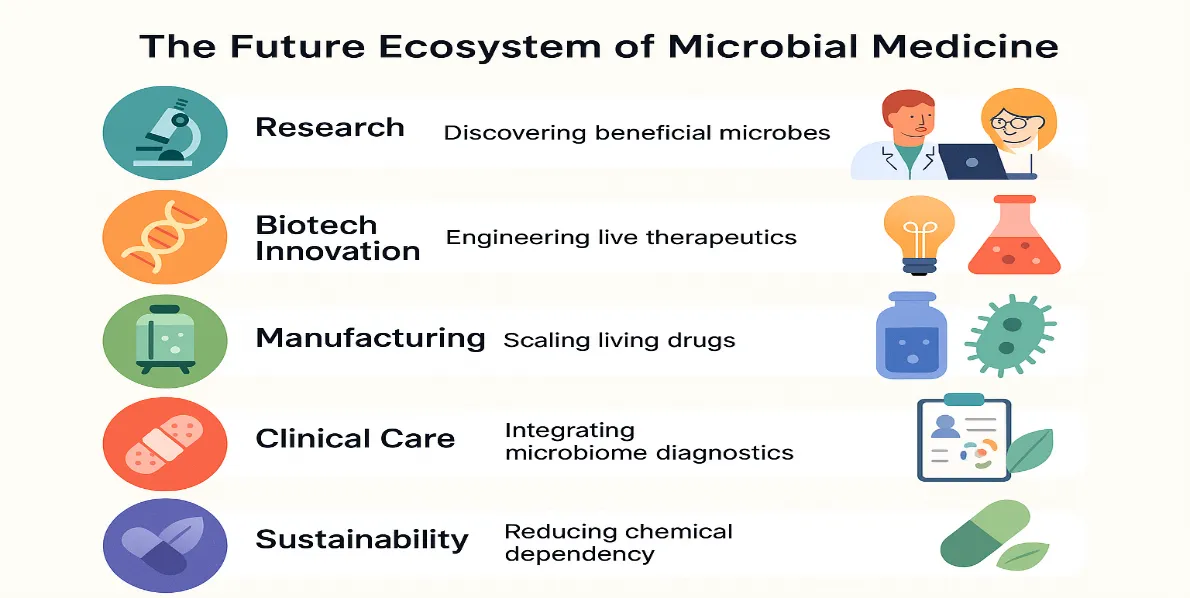
These shifts, collectively, indicate a changing trend in corporate innovation, moving away from chemically manufactured products towards biologically derived products of a symbiotic nature. The top global companies with their investments in microbial therapeutics are thus going beyond just opening new treatment frontiers. They are also, in effect, altering the very nature of medicine—a natural, living, adaptive and biologically compatible entity.
Future Outlook: The Road Ahead
Microbiome-based medicine is transitioning into a new era, one in which bacteria are not only living but also genetically engineered as more precise and responsive therapeutic agents. Scientists worldwide are uncovering new ways to harness microbes for healing, rather than fighting them. One way to envision such a future is through oral microbiome therapy, MaaT Pharma's MaaT033, which has recently demonstrated a significant safety checkpoint in patients undergoing stem cell transplantation for blood cancer. This therapy reinvigorates immune recovery by restoring the gut microbial community after intensive treatments, a landmark study demonstrating that living ecosystems may be the next frontier in oncology care.
Novome Biotechnologies has made a significant technological leap in engineered microbial therapy, which could be a game-changing solution for sustained treatment efficacy in the human gut. To demonstrate, the therapy was first tested on patients with recurrent kidney stones. It resulted in
stable microbial engraftment and metabolism improvements, thereby indicating that engineered bacteria might very soon be the cure for chronic diseases outside the gut. The future signifies a profound change in the concept of medicine. The medical sciences, which used to be at the center of fighting diseases, will now be about bringing back harmony and communication to the human ecosystem. Treatments derived from the microbiome are the clearest examples that demonstrate how the body can cure itself and, at the same time, embody the very nature of a kind of medicine that is alive, flexible, and co-evolves with life.
Conclusion
The tale of microbiome-based medicine is not only about the advances in science, but also about the reconciliation between humans and their tiny microbial partners, between medicine and nature.
What was once the enemy of infection has now become a source of intelligence. What used to cause diseases is now used to heal. This silent revolution is teaching us that innovation does not necessarily mean creating a new invention; sometimes it simply means rediscovering equilibrium.
Not far off, the use of bacterial consortia may become the new way of prescribing drugs, replacing chemical compounds, and patients will recover not through suppression, but through restoration. The laboratory of the future will not be about waging wars on microbes; rather, it will be about cultivating collaboration with them. Microbiome-based treatments evoke a profound sense; real healing is a symbiotic process. By mastering the art of living in balance with the tiniest forms of life, humanity may, in fact, come to the greatest cure of all, harmony itself.