

Regenerative or Reversible Fuel Cells: Energy Storage Solution for Renewables
Reversible Fuel Cell Systems: Advancing Clean Energy Storage for Renewables
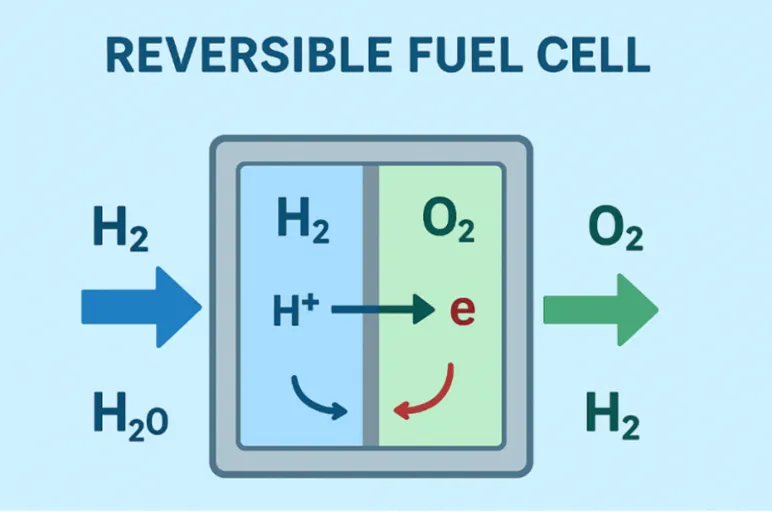
Regenerative or reversible fuel cells (RFC) are advanced energy devices that can operate in two modes: fuel cells and electrolyzer modes. In the fuel cell mode, these cells use hydrogen and oxygen to create electricity, whereas the electrolyzer mode utilizes electricity to split water molecules, producing hydrogen and oxygen gas. This dual functionality makes RFCs highly effective at energy storage, grid balancing and encouraging the integration of renewable energy sources.
RFC Applications: Transforming Energy Systems

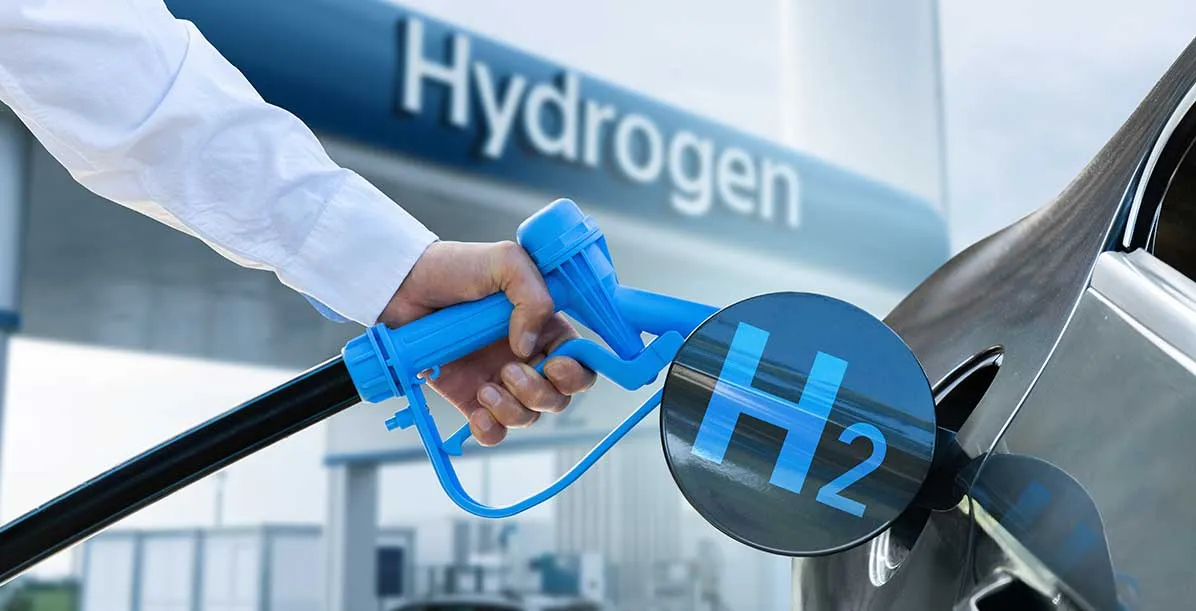
- Transportation: Hydrogen fuel cell vehicles, which effectively store and release energy as needed to increase transportation's range and efficiency, are constantly being considered in the transportation industry. RFCs are used in hydrogen fuel cell vehicles in the transportation sector, leveraging the efficiency of these cells to convert hydrogen into electricity rather than relying on internal combustion engines (ICE).
- Stationary Energy Storage: RFCs in stationary energy storage applications connect theoretical promise with real-world functionality. It analyzes the efficiency standards, operational processes and technological advancements pivotal to RFCs, emphasizing their capacity to generate and store energy. For instance, in 2024, the U.S. DOE Office of Fossil Energy and Carbon Management (FECM) announced up to $4 million to promote the production of clean hydrogen using reversible solid-oxide fuel cells (R-SOFCs). It also committed to helping make clean hydrogen a more accessible and cost-effective option for various industries.
- R-SOFCs are a promising technology for advancing energy decarbonization by enabling bidirectional conversion between electricity and hydrogen in a single device. This funding will support research and development projects that will expand the versatility and applicability of solid oxide fuel cell technology. It is a source of efficient, low-cost electricity from hydrogen or natural gas, with the focus on R-SOFC systems.
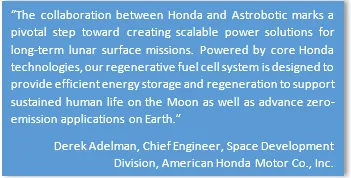
- Residential and Industrial Backup: RFCs are a clean, scalable and modular energy storage solution for homes, businesses and remote communities. In 2022, NASA-sponsored RFC technology demonstrated high-pressure hydrogen and oxygen production without the need for mechanical compressors. This highlights the technology's significance for space and lunar exploration as well as its applicability to large-scale terrestrial backup systems.
Demand Driving Factors for the RFC
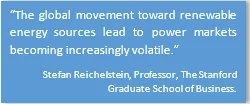
Growing Demand for Renewable & Clean Energy
RFC is becoming increasingly popular as a versatile and sustainable energy source that can meet demands for both power generation and storage. The dual-mode operation, which produces electricity and hydrogen, improves system dependability and efficiency. According to a recent study published in Nature Communications, reversible fuel cells can be used as an affordable backup power source during price spikes, such as the winter blackout in Texas in 2021. Systems can operate at full capacity through their bidirectional operation, which reduces the cost of producing electricity and carbon-free hydrogen.


Research and Development
RFC technology will continue to evolve through innovations and collaboration. The increasing focus on research and development in material science creates potential advancements. Through investment in material science, scientists and engineers can collaborate on significant innovations in critical aspects, such as catalyst durability and membrane efficiency. Catalysts play a vital role in the RFC by facilitating reactions and improving their durability, thereby increasing the life of these cells. Increasing membrane efficiency can reduce energy losses and increase ion-exchange capacity, ultimately improving the overall effectiveness and reliability of RFC systems.
Government and Private Support for RFCs
Industrial adoption is accelerating, with pilot projects and initial deployments of RFCs for stationary energy storage and microgrids. Partnerships and funding from both government and private sources are increasing, helping RFC systems move from the laboratory into practical field deployment. In 2024, the U.S.-based Cipher Neutron worked on new storage media, such as graphene slurry to store hydrogen as protons (liquid phase) for safer, modular and scalable energy storage without the need for compressed tanks. These systems offer projected round-trip efficiencies of 45%–55% and are marketed for use in both residential and industrial settings.
Challenges with RFC Technology
High Initial Cost
The high cost of RFC production is driven by the expensive materials and advanced technologies used in the process. RFCs' processing expenses are increased by their inability to achieve economies of scale, making it financially challenging for them to compete with traditional energy sources. From an economic perspective, the high initial capital requirement is the biggest barrier. Potential investors and stakeholders may be discouraged from investing unless they see immediate profit and security in the RFC market due to the large capital expenditures that serve as an entry barrier. This could create a vicious cycle where a lack of investment hampers the growth and development of RFC-related inventions and innovations.
Efficiency and Durability Issues
There are several obstacles in the way of RFC technology development, particularly in terms of efficiency and durability. The long-term degradation of cell elements, especially membranes and catalysts, is one significant problem. The ability of these materials to endure high-stress situations without losing their functionality is still a concern for long-term, sustainable operation. RFCs' overall efficiency is frequently decreased by energy losses during conversion processes, which may limit their appeal as a dependable energy storage option.
The Future of Clean Energy with RFCs
Leaders in the RFCs industry should focus on strategic initiatives that boost performance, reduce costs and speed up commercialization to fully realize the potential of this dual-mode, clean energy technology. By obtaining economies of scale through modular designs and standardized components, which would enable mass production and lower manufacturing costs, a major focus should be placed on lowering the high initial cost of RFC systems.
Supply chains can be streamlined and research and development expenses shared through joint ventures between component manufacturers, system integrators and developers of renewable energy. At the same time, ongoing research and development expenditures are necessary to enhance round-trip performance, membrane efficiency and catalyst durability. The ongoing technological advancements in raw materials and agility in manufacturing operations are expected to result in improved efficiency and lower costs of RFCs in the near future.
Conclusion: RFCs as a Game Changer in Clean Energy
RFCs show a game-changing clean energy technology with vast potential for carbon-free power generation, long-duration energy storage, and large-scale renewable incorporation. Their bidirectional operation supports the global shift to sustainable energy systems by improving grid stability and energy security. Moreover, overcoming problems relating to high initial costs, material durability and efficiency improvements will be necessary to achieve widespread adoption.
RFCs have the potential to be a key component of the infrastructure for low-carbon energy in the future with further study, strategic partnerships and encouraging legislation. In addition, the major drivers that raise the demand for RFC are increasing government investment in RFC, research and development and storing renewable energy. In application, stationary energy storage is the fastest-growing segment due to its role in renewable integration and scalability across sectors.