Hypertrophic cardiomyopathy or HCM is the most widespread heart disease affecting felines. In this medical condition, the heart develops excessive wall thickening, affecting its left side and reducing its function. The disease leads to severe health complications in cats, which can result in fatal blood clots and heart failure. The disease exhibits strong genetic links according to research, while a better understanding of HCM has created a need for early detection, continuous monitoring and specialized treatment protocols. The targeted treatment of feline HCM through Sirolimus tablets fills the therapeutic void that traditional supportive care methods cannot address. The growing number of cat owners and increasing cases of HCM have led to the development of these medications. These enhance survival chances and life quality while enabling advanced veterinary medical practices.
Evolution
The scientists discovered Sirolimus (rapamycin) in Streptomyces hygroscopicus bacteria in 1972 while studying its antimicrobial and immunosuppressive effects. They later discovered the mTOR pathway as the molecular target of Sirolimus before 2021, which proved essential for heart disease treatment through its role in cell growth and hypertrophy regulation. The FDA approved Felycin-CA1 for treating ventricular hypertrophy in cats with subclinical HCM in 2025. It became the first veterinary medication to receive this approval. The HALT Study continues its enrollment of 300 cats across 25 U.S. veterinary clinics to evaluate Felycin-CA1 safety and effectiveness in a 12-month study with weekly dosing to achieve full regulatory approval.
Breed and Genetic Risks of Hypertrophic Cardiomyopathy in Cats
High Risk Breeds of Cats
|
Breed
|
Mutation Origin
|
Genetic Basis
|
Mutation Causes
|
HCM Risk Mechanism
|
|
Maine Coon
|
Natural mutation + maintained via selective breeding.
|
MYBPC3 (sarcomeric gene)
|
Occurred naturally via evolution and environment, preserved by
selective breeding.
|
Sarcomere protein affected → heart wall thickening → HCM
|
|
Ragdoll
|
Natural
mutation + maintained via selective breeding.
|
MYBPC3
(sarcomeric gene)
|
Occurred
naturally via evolution and environment, preserved by selective breeding.
|
Similar
mechanism as Maine Coon → HCM
|
|
Persian
|
Human-driven selective breeding → mutation maintained
|
Sarcomeric pathway (exact gene not fully mapped)
|
Concentrated via selective breeding and historical cross-breeding →
high gene variability
|
Sarcomere dysfunction → HCM
|
|
Sphynx
|
Human-driven
selective breeding → mutation maintained
|
Sarcomeric
pathway (exact gene not fully mapped)
|
Concentrated
via selective breeding and historical cross-breeding → high gene variability
|
Sarcomere
dysfunction → HCM
|
Current Market Trend and Adoption
The American Pet Products Association reports that cat ownership in the U.S. increased from 40 million households in 2023 to 46 million in 2024, and then to 49 million in 2025. The 23% annual growth in cat ownership reflects both an increase in the number of cats and a deeper emotional connection between owners and their pets. The pet cat population in European countries, including Germany, France and the U.K., shows continuous annual growth. The rising number of cat owners leads to increased visibility of feline health issues, including feline HCM, the leading heart disease affecting cats. The increasing number of cat owners will lead to higher rates of HCM diagnosis, creating an urgent need for innovative breed-specific treatment solutions.
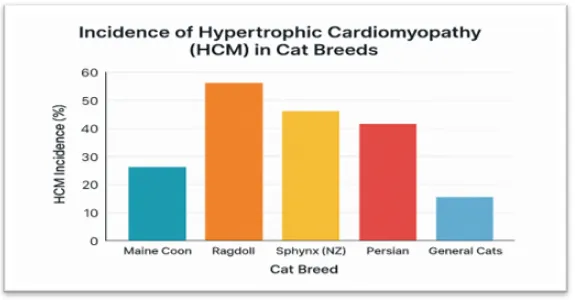
The current treatments for feline HCM using beta-blockers and ACE inhibitors manage symptoms but fail to address the root causes of the disease. The Sirolimus-based medication Felycin-CA1 from TriviumVet, through its sister company PRN Pharmaceuticals, presents a major business opportunity because it provides better therapeutic results than existing treatments by stopping or reversing heart muscle thickening. The increasing availability of Felycin-CA1 will lead to its establishment as the leading treatment for feline HCM patients while expanding its market share. The FDA approval of Felycin-CA1 and the high risk of HCM in specific breeds, such as Maine coons at 20% and ragdolls at 56% with the MYBPC3 mutation, drive market expansion. The FDA has approved Felycin-CA1 as the first Sirolimus-based medication for treating subclinical HCM in domestic cats. The veterinary clinics and specialty cardiology institutes use Felycin-CA1 as their primary treatment for HCM-prone domestic cat breeds, including ragdolls and Maine coons. TriviumVet maintains a dominant market position because it operates without direct competition, while the expanding cat population and increasing demand for cardiac care services create promising prospects for business expansion and product development.
Clinical Trials:
RAPACAT Study
The RAPACAT trial was conducted for a period of 6 months in partnership with NC State University and TriviumVet. It was an early clinical study that evaluated oral Rapamycin, also known as Sirolimus, and structural effect rather than a late-stage pivotal trial. The primary issue in HCM is the thickening of the heart muscle walls, and the study sought to see whether rapamycin could slow down or mitigate this process.
The study followed 180 days of treatment with oral Rapamycin at the correct dose, which resulted in a 0.17 mm decrease in heart muscle wall thickness among the treated cats. This small reduction proved promising because it indicated that the drug might help reduce or stop heart muscle thickening, which benefits feline heart health.
HALT Study
The HALT study is conducted by TriviumVet for Felycin-CA1, a delayed-release form of sirolimus, in cats with subclinical hypertrophic cardiomyopathy (HCM), a condition in which symptoms are present but have not yet materialized. A blinded, randomized, placebo-controlled study is being conducted by about 25 U.S. veterinary clinics that have experience treating cats with HCM. The trial, which will involve roughly 300 cats, will evaluate the safety and effectiveness of weekly Felycin-CA1 dosage over 12 months. The HALT study works to obtain full FDA approval through evidence-based research, which demonstrates both the safety and effectiveness of the drug for treating feline HCM. The HALT study accepts veterinary referrals for participation.
Conclusion
Hypertrophic cardiomyopathy (HCM) leads to blood clot formation and heart failure among high-risk breeds of cats that face genetic health issues. The standard medications, beta-blockers and ACE inhibitors, help manage symptoms of HCM, but they do not solve the root cause of the condition. The Sirolimus-based treatment Felycin-CA1 shows promise in stopping and reversing heart muscle thickening, representing a novel therapeutic approach. The treatment Felycin-CA1 shows promise in transforming feline heart care by establishing a new standard for HCM treatment, while the HALT research advances toward full FDA approval, increasing cat ownership and public awareness.