

Textile-Integrated Photovoltaics
Fabric-Embedded Solar Energy Systems
Textile-integrated photovoltaics (PVs) are flexible solar cells that are directly combined with textiles, creating fabrics that can produce renewable energy from sunlight. These panels are wearable, flexible and lightweight in contrast to the rigid ones we are used to. These solar textiles can be used for anything from powering wearable electronics to large-scale architectural installations like building shades. By combining the flexibility, drape and aesthetic of fabric with the functionality of solar power, textile-integrated PV provides sustainable, lightweight and adaptable energy solutions for both personal and structural applications.
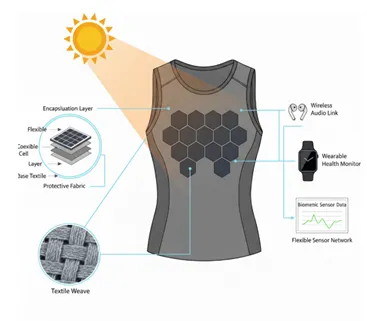
for daily living, humans increasingly depend on battery-powered devices like smart watches, wireless earbuds, health trackers and laptops. And for outdoor activities or travel, plugging in is not always an option. That’s where solar comes in. Imagine a soldier's uniform with a powerful GPS device and a radio without carrying kilos of spare batteries, or a hiking backpack that charges a phone while trekking in the mountains. Textile-integrated PV solutions are available wherever we are, eliminating the need to rely on the grid or carry bulky battery packs.
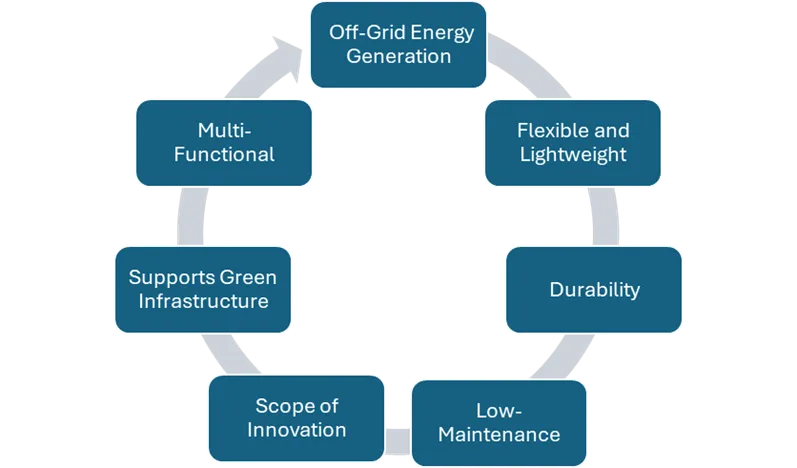
Key Market Drivers
Fashion Industry Adoption: The advancement in solar cell fabric in textile-embedded PV elements, which combine fashion with function, generating electricity from sunlight. These smart fabrics are flexible, lightweight, washable and breathable in outdoor sportswear and refugee shelters, producing up to 200 MW of power per square meter. Startups like Soliyarn and Powerweave offer athleisure garments with energy storage, GPS and temperature control. This trend generates “functional fashion” for the textile industry, such as wearable technology that is convenient for commuters and solar accessories.
Advancement in Materials: Conductive polymer (CP) has emerged as a key material in the development of flexible and lightweight energy-harvesting textiles. Their excellent conductivity, mechanical strength and compatibility with other materials make them ideal for enhancing textile-based solar devices. For instance, Poly (3,4-ethylenedioxythiophene) (PEDOT), polypyrrole (PPY), dye-sensitized solar cells (DSSCs), and organic solar cells (OSCs) have achieved power conversion efficiencies (PCEs) above 10% (Iftikhar Ali et al., 2024).
Gen Z and Millennial Consumers: Gen Z and millennial consumers are increasingly prioritizing environmentally friendly products and technology. Solar fashion aligns with their values: sustainability, self-expression and innovation. These wearables are also showing up at climate protests, eco-friendly music festivals and even futuristic art exhibits. Solar fashion is evolving from a design fad to a cultural movement as the lines between fashion, activism and innovation become increasingly hazy.
Companies Operating in Textile-Integrated PV Market
- Vollebak: The company was founded in 2015 and is headquartered in London, the U.K. In 2018, Vollebak launched a solar-charged running jacket that was named TIME’s Best Invention. This highly responsive fabric can be instantly charged by any light source, causing it to glow a “Kryptonite Green." Following its initial success, Vollebak released its solar-charged puffer jacket the following year, which received the same positive response.
- Pauline van Dongen: The Netherlands-based Pauline van Dongen's product portfolio includes a solar shirt and a solar dress. Under bright sunlight, the shirt produces around 1W of electricity – enough to charge a typical phone in a few hours. The shirt can charge smartphones, MP3 players, cameras, GPS systems and other USB-compatible handheld or portable devices. Electricity can be stored for later use in the shirt’s battery pack, which is invisibly located in the front pocket.
- Pvilion: In 2014, the U.S.-based Pvilion partnered with Tommy Hilfiger to design and produce a solar-powered jacket for the holiday season. The innovative features include a water-resistant, lightweight, removable solar panel unit made with flexible amorphous silicon technology.
Regional Perspectives on the Adoption and Impact of Textile-Integrated PV
- Europe is emerging as a frontrunner in textile-integrated PV, driven by R&D collaboration and EU-backed suitability goals. For instance, in June 2025, the Suntex project integrated organic PV cells into durable woven polyester textiles for outdoor applications such as tents and facades. With €2.13 million ($2.5 million) in funding from Eurostars, the project focuses on robustness, modularity and recyclability for facility repairs and upgrades using better organic PV panels. The association comprises firms from the Netherlands, Denmark and Germany, with an industry focus on encapsulation, roll-to-roll fabrication, and sustainable materials.
- North America is positioning itself as a key hub for solar-powered textiles, with strong emphasis on defense, outdoor and commercial applications. The region's focus lies in combining durability with portable clean energy solutions to meet both civilian and military needs. For instance, in 2022, Pvilion won two Advanced Textile Association IAA awards for its self-powering canopy and rapid-deploy Hands off Expeditionary Tent. Its innovation lies in laminating or integrating silicon solar cells into fabric, enabling a durable, portable and energy-generating structure.
Future Outlook
Textile-integrated PV is rapidly emerging as a promising solution to meet the increasing demand for portable and wearable electronics, with applications spanning sports and wellness, healthcare, safety and industrial workwear. Textile-integrated PV enables clean energy generation through techniques like multi-layered textile architectures, specialized energy-harvesting yarns and adaptable functional materials that can sense heat or stress. Additionally, the efficiency, durability and seamless integration of PV textiles must be continually improved through ongoing research and development to realize this potential. Textile producers, energy providers and academic institutions can collaborate strategically to drive innovation and accelerate the commercialization of textile-integrated PV.
Conclusion
The textile-integrated PV market is experiencing transformative growth driven by innovation, which includes the following:
- Flexible solar cells, conductive polymers, nanomaterials and embedded sensors.
- Sustainability goals (like circular economy, clean energy transition and sustainable fashion).
- Cross-sector collaboration (including fashion and wearables, defense, and military sectors).
However, the industry still faces challenges in producing compact solar panels that can be integrated into wearables. This is expected to be overcome in the near future, thanks to increasing strategic investments in R&D by the government and companies operating in the overall supply chain. Many international companies worldwide are leading the commercialization of solar-embedded textiles. As consumers’ inclination toward achieving carbon neutrality grows, demand for sustainable energy solutions and technologies increases, making textile-integrated PV a major industry trend.