

4D Imaging Radar: A New Dimension in Real-Time Environmental Awareness
November 14, 2025
Overview
The 4D imaging radar is an advanced sensing technology that captures distance, direction, speed and helps determine the height or elevation of an object. These features enable the creation of a real-time and detailed roadmap for accurately detecting objects, even in harsh weather conditions such as fog, snow and rain. The demand for 4D imaging radar is expected to grow at a significant pace, with applications spanning aerospace, automotive, defense, industrial automation and others. Its ability to create and deliver high-resolution imaging makes it a fundamental technology in the development of smart sensing and intelligent mobility solutions.
To obtain accurate outputs, the 4D imaging radar system utilizes multiple antennas, each with a wide beam. The 4D imaging radar uses Multiple Input Multiple Output (MIMO) antennas for data collection. One of the major differentiating factors between 3D and 4D imaging is that 3D imaging radar antennas emit waves in a horizontal direction, whereas 4D radar imaging antennas emit waves in both horizontal and vertical directions. These beams are then combined to create an array of narrow beams, a process known as digital beamforming. This process enhances the final image resolution, and the resulting data is then processed for further analysis and insight generation.
Key Features of 4D Imaging Radar
4D imaging radar represents a significant advancement in sensing technology, designed to integrate advanced signal processing with AI to provide precise environmental awareness. This enables vehicles and systems to gain awareness of their surroundings with improved clarity and accuracy, even in challenging conditions.
High-resolution Imaging: The 4D imaging radar system, which utilizes the beamforming method, is known for its high-resolution imaging capabilities. This process helps detect nonmetallic objects, types of vehicles, adults, children, and other items. The radar system has a long detection range, which enables it to provide early warnings.
All-weather Operations: The 4D imaging radar system is designed to perform reliably and provide accurate results in various weather conditions, including snow, fog, and rain, where other systems, such as light detection and ranging (LiDAR), may not function effectively.
AI Integration and Real-time Data Processing: This imaging system is enabled by AI, which is one of the fastest-growing technologies, particularly in the automotive industry. Real-time data processing helps generate immediate results for speed violations. AI can facilitate quick data processing, improved analysis, trend recognition, and other such functions, leading to better and informed decision-making.
Key Applications of 4D Imaging Radar
The 4D imaging radar is being used for the following applications:
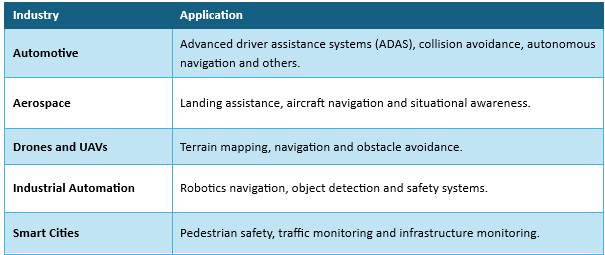
Source: BCC Research
Market Enablers of 4D Imaging Radar
Automated vehicles and ADAS are among the major trends in the automotive industry at present. The demand for autonomous cars has been growing rapidly in the past few years. The World Economic Forum reported that by 2025, approximately 63.6% of the total number of passenger cars registered globally are expected to have Level 1 automation. Level 1 autonomy includes vehicles with partial automation in driving and steering. The 4D imaging radar system is a major component supporting this technological change in the automotive industry. With the rising automation in vehicles, the demand for this technology is expected to grow.
The rising adoption and integration of ADAS in vehicles is another factor leading to the demand for the 4D imaging radar system. According to a study sponsored by the AAA Foundation for Traffic Safety, which focused on understanding the safety provided by ADAS, it is estimated that by 2050, more than 50% of vehicles in the U.S. will come equipped with a complete ADAS suite.
ADAS is also dependent on the 4D imaging radar system for various functions, including object tracking, automated emergency braking and providing high-resolution image detection among other benefits. Thus, both these trends of autonomous vehicles and ADAS are expected to drive the demand for the global 4D imaging radar market in the coming years.
Strategic Advantages of 4D Imaging Radar
With ongoing research and investments, as well as their associated advantages, the application of this technology is expected to expand across various devices and sectors. It is increasingly being used for improved range detection as it helps gain benefits such as identifying objects from a distance, controlling speed and checking violation practices. The 4D imaging radar system can help in understanding and analyzing trends in traffic and vehicles, which can aid in traffic management, speed monitoring and identifying potential traffic violations.
The high-resolution imaging provided by this radar technology can help detect any object and vehicle and understand its maneuverability and speed, helping both drivers and management authorities. Its high precision helps reduce the number of false results, thereby improving accuracy.
Development Journey of Radar Technology
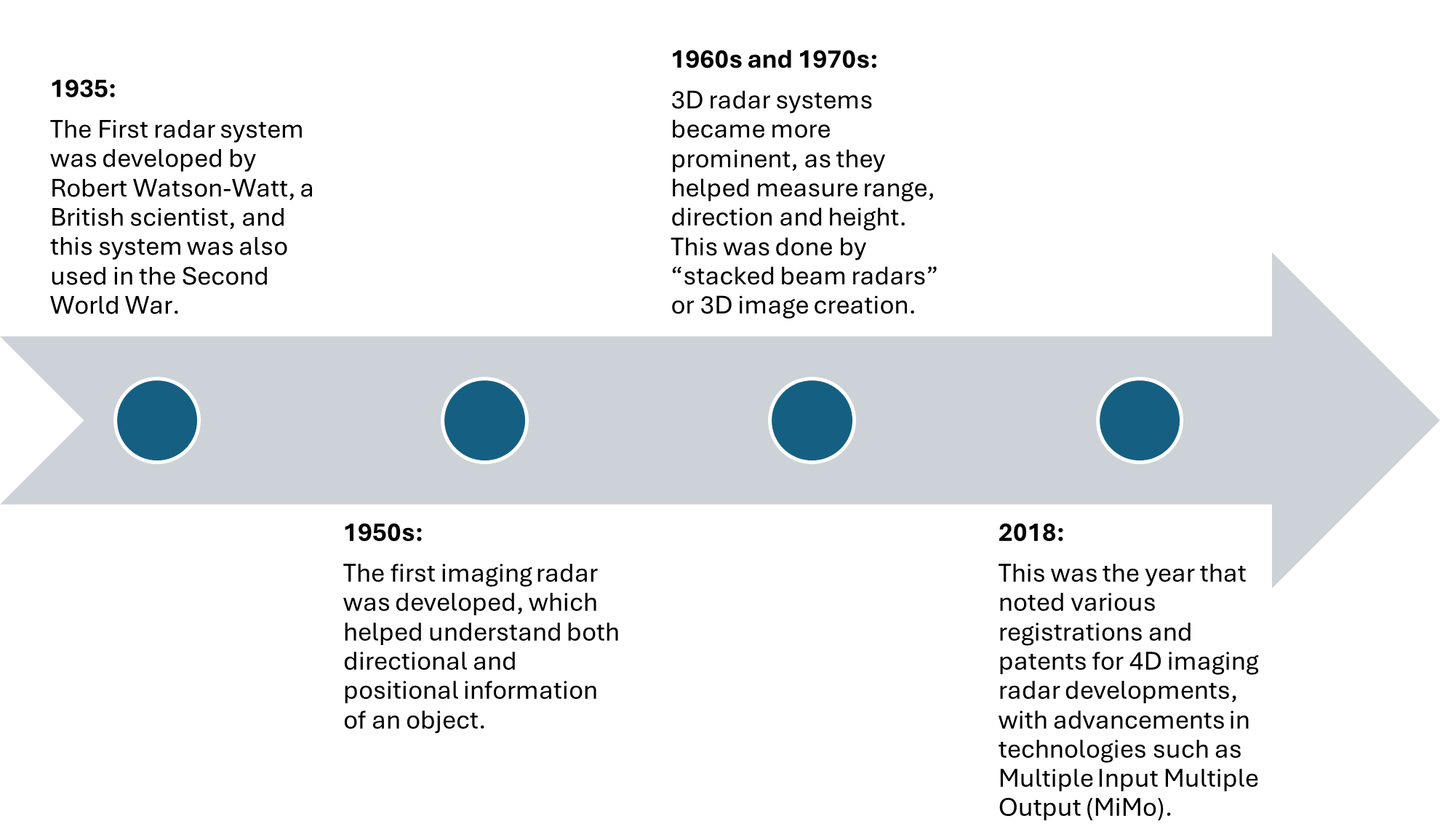
Road Map of 2D to 4D Radar Systems
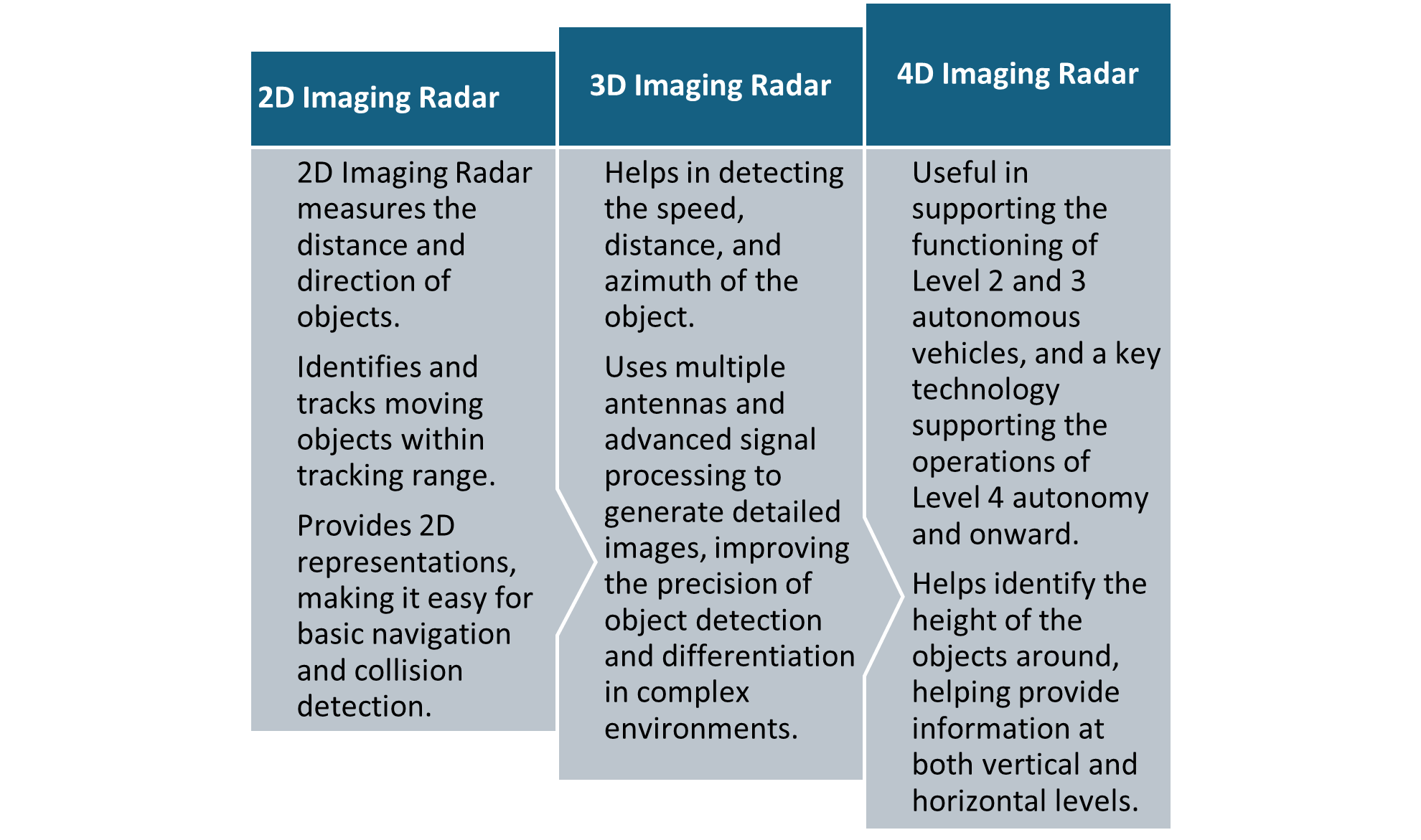
Source: BCC Research
Zeta Mobility, bitsensing and the Korea Advanced Institute of Science and Technology (KAIST) entered a partnership in August 2025 to develop and commercialize artificial intelligence (AI)-supported 4D imaging radar technology. This partnership aims to improve the precision and detection capabilities of this radar system in adverse weather conditions. The parties will focus on factors such as speed, distance, direction and elevation for the same purpose. These parameters help ensure safe and reliable autonomous driving, with improved object detection, as well as updates on pedestrians, vehicles and roadside infrastructure.
Challenges to 4D Imaging Radar Adoption
4D imaging radar provides excellent precision and versatility, however, certain challenges such as cost and technological issues are hindering its widespread adoption. Various factors such as signal processing requirements, implementation cost and processes, and different regulatory standards are hindering large-scale adoption of this technology.
Cost and scalability: Cost is one of the major factors hindering the adoption of 4D imaging radar, as this system relies on hardware, antennas, chipsets and other AI-supported systems for faster and more efficient operations. All these factors contribute to the cost, thereby affecting its wider adoption, scalability and usage.
Signal processing and standardization issues: The 4D imaging radar system aims to provide high resolution, which requires higher frequency levels. The currently allowed frequency levels cannot support the autonomous mobility requirements beyond Level 3, which also restricts the market's growth. The regulations surrounding frequencies are constantly changing from country to country, which also affects their worldwide adoption.
Future Outlook and Conclusion
The 4D imaging radar technology is growing at a significant rate due to the ongoing advancements in this radar system. It is expected that the integration of technologies such as Simultaneous Localization and Mapping (SLAM), Synthetic Aperture Radar (SAR) and multiple frequency bands will further improve the level of object detection and accuracy. As the demand for Level 4 and 5 autonomous vehicles increases, the integration and demand for 4D imaging radars are expected to grow further. Further investments in technology, along with improvements and increased production levels, can lead to higher demand for 4D imaging radars, resulting in cost reductions.
Thus, to conclude, though at a very early stage, with various benefits that technology offers and with the rising number of autonomous vehicles, the adoption of this radar system is expected to grow in the coming years. With the rise in safety regulations, smart city trends and growth in smart vehicles, the demand for 4D imaging radar is expected to increase.
Need custom marketing data, insights, or further details? Reach out to us at info@bccresearch.com
BCC Library Membership Benefits
Unlimited Access to Market Research Reports for Academic Institutions and Corporations.
Custom Research
Tailored solutions across industries for your unique business needs.
MEMBERSHIP
Members get unlimited category or collection access, plus exclusives, events and discounts.
EXPLORE BENEFITSCUSTOM MARKET RESEARCH
Why go off-the-rack when you can go bespoke? Custom projects can be researched to match your unique needs.
FIND OUT MORE