

Advanced Turbulence-Induced Vibration Technology
November 03, 2025
Overview
Turbulence-induced vibration (TIV) technology focuses on either harvesting energy from the chaotic vibrations caused by turbulent flows or reducing the harmful effects of these vibrations on structures in the energy sector.
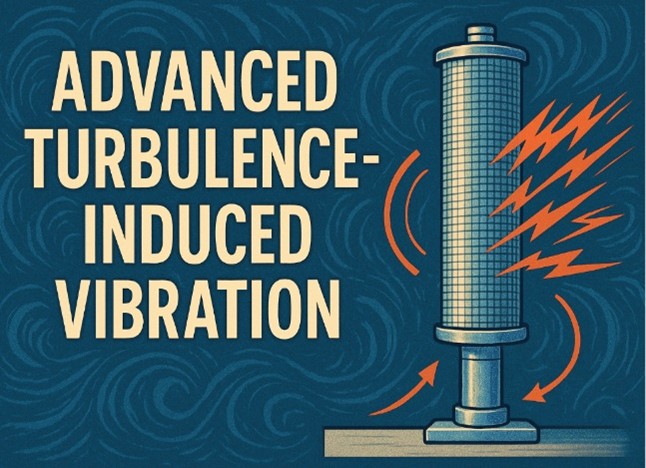
TIV is often seen as an unfavorable scenario that causes structural fatigue in various end-use applications, such as nuclear reactors, wind energy and other critical infrastructure. However, recent innovations are shifting this perspective by utilizing innovative technologies such as piezoelectric sensors and hybrid transducers, which are now being explored to convert these detrimental vibrations into usable electricity.
This opens up possibilities for powering small appliances and remote sensors in turbulent environments, turning a once-problematic challenge into a valuable energy resource.
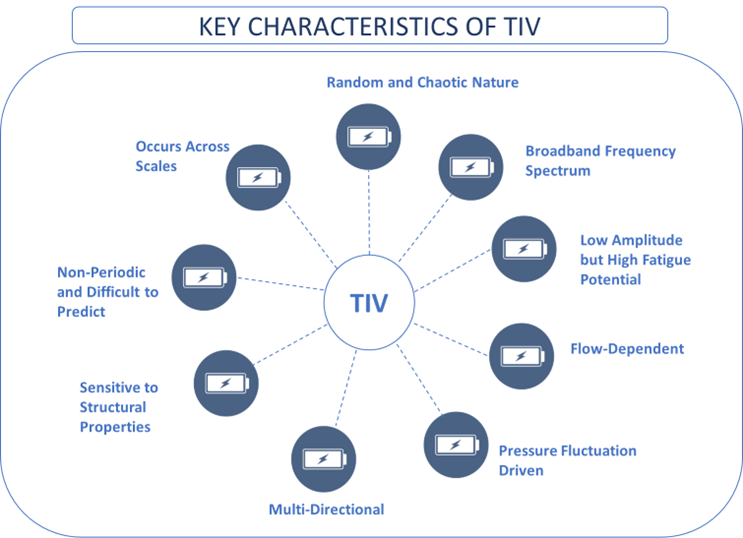
Some of the widely used TIVs are vortex-induced vibration (VIV) and turbulent buffeting. Here is how these are being embedded into the energy infrastructure.
- VIV: It is a phenomenon that occurs when fluid, such as air or water, passes around an object, like a cylinder or a pipeline, creating a rotating pattern (vortices) on its sides. This rotation pushes the object back and forth, making it vibrate. It can also be used in new technologies to generate energy from vibration.
- Turbulent Buffeting refers to the shaking of the structure caused by the random, uneven push of turbulent air or water. When the flow is rough and chaotic, it repeatedly hits the surface in an irregular way, causing the object to vibrate. Buffeting is more sudden, unpredictable and difficult to control than smooth vibration.
- Hybrid/Multi-Mode Harvesters: Hybrid or multi-mode flow energy harvesters combine two or more flow-excited mechanisms, most commonly VIV and galloping or other broadband turbulence response. These systems often utilize hybrid transduction techniques, like piezoelectric and electromagnetic elements, as well as multi-degree of freedom (MDOF or 2DOF) mechanical coupling. For instance, in 2022, Zhiqing Li et al. developed a dual-beam spring-coupled harvester in which one beam captured VIV at low wind speeds while the other induced galloping at higher speeds. This hybrid design produced higher average power and expanded the operating bandwidth.
Key Market Drivers
- Rise of Bladeless Technologies: Particularly in urban settings where safety, noise and space are top concerns, bladeless and turbulence-induced vibration technologies are becoming advanced substitutes for traditional wind turbines. For instance, Aeromine Technologies uses progressive turbulence-induced vibration technology to provide scalable rooftop wind solutions for urban commercial spaces. It features a unique bladeless design, ensuring reliable energy output with minimal noise and visual impact.
- Rising Investment in Smart Grids: The U.S. Government provided Smart Grid Grants for up to $3 billion (2022–2026) to fund technologies that enhance grid flexibility, efficiency and resilience. This will drive the demand for advanced turbulence-induced vibration technology due to various factors, such as harvesting ambient flow energy from wind and structural vibrations to power distributed sensors.
Cases from the Real World
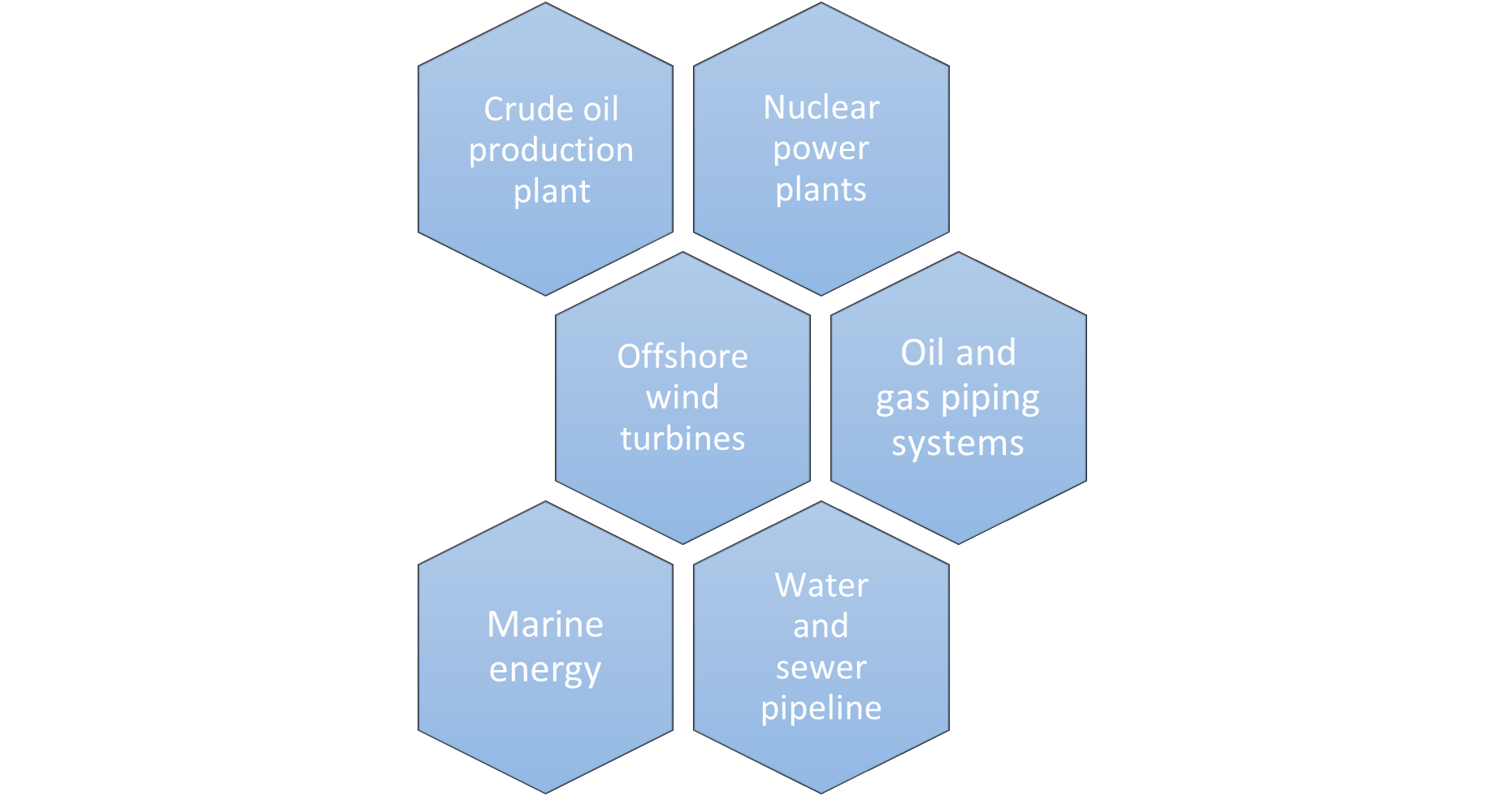
- Turbulence and Vibration Effects in Nuclear Reactors: TIV in nuclear reactors occurs when turbulent coolant flow interacts with fuel rods and other core structures, causing oscillations that can lead to material fatigue and wear. In addition to TIV, other flow-induced phenomena include VIV, which occurs when irregular vortex shedding creates periodic forces on rods; Grid-to-Rod Fretting (GTRF), which occurs when vibrations cause wear between fuel rods and spacer grids; fluid elastic instability, which occurs when self-excited oscillations occur in flexible rod bundles; cross-flow vibrations, which occur when flow is perpendicular to rod axes; and flow-induced acoustic resonance, which is brought on by pressure waves in the coolant. Ensuring the structural integrity, safety and effective operation of nuclear reactors depends on understanding and mitigating these phenomena through sophisticated computational modeling and experimental investigations.
- Smart Grid & IOT Devices: A Tiny vibration harvesting system can power sensors in remote areas, reducing the need for batteries. For instance, oil, gas, or water pipelines experience natural turbulence that produces constant vibration. By harvesting this energy, the pipeline can power sensors that continuously monitor flow, pressure and leaks, which are essential in making the system “self-monitoring” and maintenance-free.
- Marine Energy: In the marine context, TIV, especially related to VIV, is a fluid-structure interaction phenomenon. It happens when water flowing past marine structures (such as cables, pipelines and risers) causes vibrations because of alternating vortex shedding. Additionally, efficient turbulence modeling is crucial for forecasting and controlling these vibrations in intricate marine environments.
Future Outlook
Companies operating in the advanced TIV technology industry should adopt a proactive approach that blends innovation with practical use. It can be advantageous for vendors to collaborate with academic and research institutions to test novel hybrid designs under realistic turbulence conditions, ensuring scalability and reliability.
The potential of TIV technology, especially for grid resilience and flexibility, can be demonstrated at a large scale by initiating pilot projects and corresponding with governments and utility companies to secure initial capital requirements, such as Smart Grid Grants. Concentrating on urban infrastructure projects where traditional wind turbines are limited by environmental concerns, such as noise, safety, or available space, can open new avenues for influence and adoption.
Conclusion
The TIV technology sector is set for significant growth, driven by innovations like bladeless designs and supportive government initiatives. Bladeless TIV systems address safety, noise and space concerns while providing compact, sustainable energy solutions for rooftops, facades and scattered urban sensors. These systems are ideal for urban environments. The deployment of TIV systems, increased adoption potential, and the development of resilient, flexible and efficient urban energy infrastructure present opportunities for government-backed investments in distributed sensor networks, smart grids and renewable energy integration.
Due to the rising demand for clean, quiet and space-efficient energy solutions in urban areas and the integration of TIV devices into smart city infrastructure, the urban renewable energy sector is growing fastest among various industries. These factors indicate that TIV technologies will soon play an increasingly vital role in next-generation energy systems, smart cities and renewable energy production.
Need custom marketing data, insights, or further details? Reach out to us at info@bccresearch.com
BCC Library Membership Benefits
Unlimited Access to Market Research Reports for Academic Institutions and Corporations.
Custom Research
Tailored solutions across industries for your unique business needs.
MEMBERSHIP
Members get unlimited category or collection access, plus exclusives, events and discounts.
EXPLORE BENEFITSCUSTOM MARKET RESEARCH
Why go off-the-rack when you can go bespoke? Custom projects can be researched to match your unique needs.
FIND OUT MORE