

Graphene in Semiconductors: Unlocking the Next-Generation Performance in Electronics
November 13, 2025
Introduction
The semiconductor industry is continually seeking materials that can enhance the performance of electronic devices, making them faster, smaller and more efficient. Graphene, a single layer of carbon atoms arranged in a hexagonal lattice, has emerged as a revolutionary material in this field. Due to its exceptional properties, such as high electrical and thermal conductivity, impressive mechanical strength and flexibility, graphene is a highly promising material for next-generation electronics.
The Evolution of Graphene in Semiconductor Applications
The journey of graphene as a viable semiconductor material has been shaped by the industry's desire to overcome the fundamental limitations of traditional silicon-based semiconductors. While silicon has served as the backbone of the semiconductor industry for decades, its physical limitations are becoming apparent as devices continue to shrink in size. Graphene, in its natural state, is a semi-metal and an excellent conductor, but this property presents a challenge. For use in digital logic circuits, a material must have a bandgap, allowing it to be switched between "on" and "off" states. Without this crucial characteristic, graphene's use in digital electronics was limited.
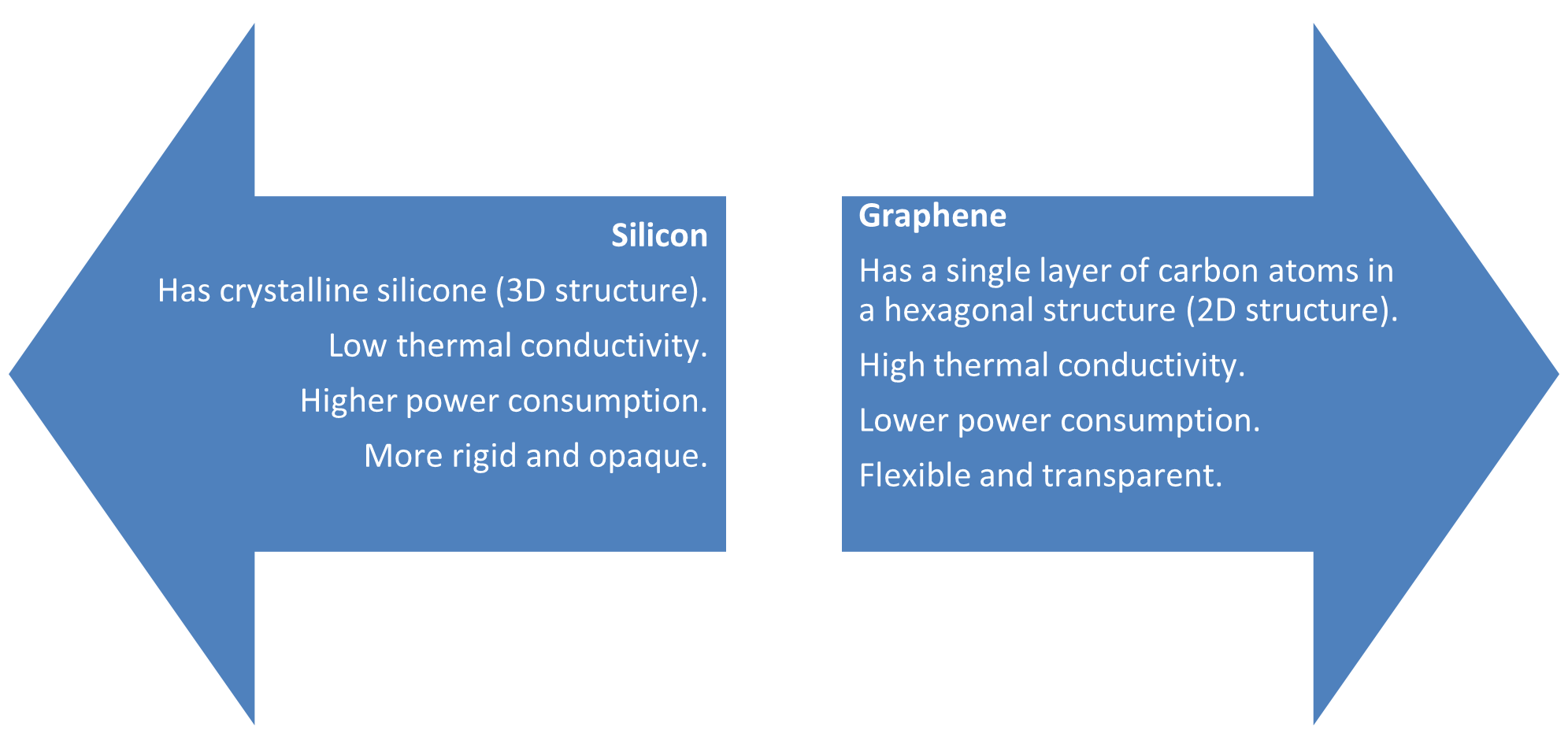
Source: BCC Research
Researchers at the Georgia Institute of Technology achieved a significant breakthrough that addressed this limitation. In January 2024, they successfully developed the world's first functional semiconductor by growing a single layer of graphene on a silicon carbide wafer. The process created a chemical bond between the graphene and the silicon carbide, effectively inducing a bandgap in the graphene layer and granting it the necessary semiconducting properties.
This innovation was a monumental step forward, as it demonstrated that graphene could be made compatible with conventional microelectronics processing methods, a critical requirement for any material to be a viable alternative to silicon. Since this breakthrough, the demand for graphene in semiconductors has experienced rapid growth, driven by advancements in manufacturing techniques such as Chemical Vapor Deposition (CVD). CVD is a method that produces high-quality, large-area graphene films, which are essential for mass production in the electronics industry.
Driving Forces behind Graphene Adoption in the Semiconductor Industry
Graphene offers exceptional electrical, thermal, and mechanical properties, making it an ideal material for next-generation semiconductors. Its offerings of faster and more efficient components are driving its adoption across various industries, particularly in applications such as flexible displays, high-speed transistors and energy-efficient sensors.
Rising Demand from the Electronics Industry
Graphene's superior electrical and thermal conductivity make it an ideal material for applications such as flexible displays, high-speed transistors and energy-efficient sensors. It is a strong alternative to indium tin oxide used in touchscreens. Recent breakthroughs include the development of graphene-based films for foldable displays that significantly improve heat dissipation, and flexible biosensors that can be integrated into e-textiles and wearable patches for real-time health monitoring.
In January 2025, researchers at Seoul National University of Science and Technology developed the graphene-enabled laser lift-off (GLLO) technique, which can aid in the manufacture of ultrathin, flexible displays. The graphene layer is said to enhance UV light absorption, reduce adhesion, distribute heat evenly and prevent ruptures and residue formation on ultrathin films as thin as 2.9 micrometers. This method will also help maintain electrical and mechanical performance even after extreme twisting and folding, making it suitable for use in wearable and health monitoring devices and applications.
Growing Usage in the Automotive, Aerospace and Defense Sectors
Graphene-based devices can enhance battery performance and energy efficiency in electric vehicles (EVs). In the aerospace and defense sectors, its lightweight and high mechanical strength help enhance electronic components, and its high electron mobility enables faster radio frequency (RF) and microwave communication systems. Graphene-based polymers and composites are also being integrated into the manufacturing processes of vehicles. These composites help reduce the vehicle's weight, which in turn improves fuel efficiency for internal combustion engine (ICE) vehicles and enhances the driving range for electric vehicles.
In May 2025, Lyten introduced its new venture, Lyten Motorsports, which aims to bring ultra-lightweight and high-strength components specifically designed for racing cars. These parts will be developed using Lyten’s 3D Graphene platform and will provide benefits such as reduced weight, improved permeability and conductivity and enhanced strength.
Increased Government and Private Investments
Governments and companies in countries such as the U.S., China and the UAE are investing heavily in R&D to develop and commercialize graphene. For example, in early 2025, GMG secured a $5 million public offering to support its ongoing operations, commercialization efforts and product development, particularly in graphene aluminum-ion batteries and other clean technology applications. In October 2024, U.K.-based Paragraf successfully raised $55 million in a Series C funding round. This round was led by the UAE's sovereign wealth fund, Mubadala, indicating strong international interest and investment in scaling up manufacturing capabilities for graphene electronics.
Challenges Hindering Graphene Integration in Semiconductors
Graphene offers exceptional benefits in transforming semiconductor technology, with its unique properties and advanced features. However, its widespread adoption is still affected by factors such as integration and scalability issues, production, and environment related concerns.
Environmental Impact: Graphene nanomaterials, such as graphene oxide, can be highly mobile in lakes and streams, posing a potential environmental threat if released into these ecosystems.
High Production Costs and Scalability Issues: Manufacturing high-quality, homogeneous graphene cost-effectively on a large scale, while maintaining the consistent properties required for semiconductor applications, remains a challenge.
Technological Complexity: Integrating graphene into existing manufacturing processes presents technical challenges due to the incompatibility of its synthesis and transfer processes with the high temperatures and contamination sensitivity of traditional silicon-based manufacturing lines. For example, growing and transferring graphene from a metallic substrate can introduce metal contaminants that damage sensitive silicon devices, and many of these processes require temperatures that would destroy the components of a standard chip.
Real-World Applications of Graphene in Semiconductor Technology
|
Industry |
Use case |
Advantage |
|
Electronics and Computing |
It is beneficial and preferred for flexible and transparent devices such as foldable phones and high-speed transistors. |
It helps provide a more flexible and compact design for the device, along with faster processing. |
|
Automotive and Transportation |
It is used in EV control sensors and systems. |
The graphene in semiconductors helps improve EV range and efficiency while reducing the vehicle's weight. |
|
Healthcare and Biotechnology |
Graphene in semiconductors can be used in ultra-sensitive diagnosis and imaging chips, as well as wearable health monitors. |
It supports continuous parameter monitoring and accurate sensing. |
|
Telecommunication |
It is suitable for 5G/6G components and optical chip-to-chip communication. |
It offers low energy consumption and quick data transfer. |
Source: BCC Research
Key Companies Driving Graphene Adoption in Semiconductor Industry
Major companies operating in the graphene semiconductor ecosystem include Haydale Graphene Industries PLC, Directa Plus PLC, First Graphene Limited, Graphenea S.A., NanoXplore Inc., ACS Material LLC and Advanced Material Development Ltd. Other prominent companies include Paragraf, Versarien and Global Graphene Group (G3).
|
Company |
Initiatives |
|
Haydale Graphene Industries PLC |
The company continues to focus on its patented HDPlas plasma functionalization process to create tailored graphene products for various applications, including inks for flexible electronics and additives for elastomers. |
|
NanoXplore Inc. |
In 2024, the company acquired Dolphin Design's ASIC business to strengthen its position in the aerospace and high-reliability components segment. |
|
Graphenea S.A.
|
The company is a key partner and the leading supplier of graphene for the Graphene Flagship, a major European research initiative. |
|
Global Graphene Group (G3) |
G3 strongly emphasizes intellectual property, with over 490 patents related to advanced batteries. The company is working on commercializing graphene-protected lithium metal anode technology and a process-friendly electrolyte (Fire Shield) to facilitate the transition to solid-state batteries. |
|
Directa Plus PLC |
In 2025, the company secured a contract with Midia International SA and extended its contract with OMV Petrom for Grafysorber technology. It also signed a U.S. distribution deal to enter the environmental decontamination market. |
|
ACS Material LLC |
In 2025, ACS partnered with Rimere to distribute its nanocarbon materials globally and launched its ThermalSure Testers for high-temperature research. It also introduced its InSitu Pro series of devices, designed for advanced temperature-controlled testing. |
Source: BCC Research
Mapping the Path Ahead for Graphene-Based Semiconductor Technology
The global demand and preference for graphene in semiconductors is on a strong growth trajectory. While significant challenges such as high production costs, scalability issues and environmental concerns persist, ongoing breakthroughs in R&D, such as the creation of a functional graphene semiconductor at the Georgia Institute of Technology, are paving the way for its wider adoption. As the demand for faster, more efficient and flexible electronics continues to rise across various sectors, graphene is set to move beyond being a laboratory marvel and become a cornerstone of the semiconductor industry. Its unique properties hold the potential to revolutionize computing in the next five decades.
This anticipated transformation is being driven by the strategic initiatives of key companies in the market. These companies are actively forging new partnerships, investing heavily in R&D and expanding their production capabilities. For example, in 2024, NanoXplore Inc. acquired Dolphin Design's ASIC business to strengthen its position in the aerospace and high-reliability components segment. The company’s efforts are directly aimed at addressing the existing user challenges and capitalizing on the growing demand for graphene-enhanced materials in a wide range of applications. This concerted effort from both the research community and industry signals a highly promising future for graphene's role in a new era of high-performance electronics. With continued innovation and strategic investments, the semiconductor industry is poised to unlock the potential of this material and integrate it into the foundation of the digital world.
Need custom marketing data, insights, or further details? Reach out to us at info@bccresearch.com
BCC Library Membership Benefits
Unlimited Access to Market Research Reports for Academic Institutions and Corporations.
Custom Research
Tailored solutions across industries for your unique business needs.
MEMBERSHIP
Members get unlimited category or collection access, plus exclusives, events and discounts.
EXPLORE BENEFITSCUSTOM MARKET RESEARCH
Why go off-the-rack when you can go bespoke? Custom projects can be researched to match your unique needs.
FIND OUT MORE