

Photocatalytic Coatings: A New Era of Sustainable Surface Technology
November 11, 2025
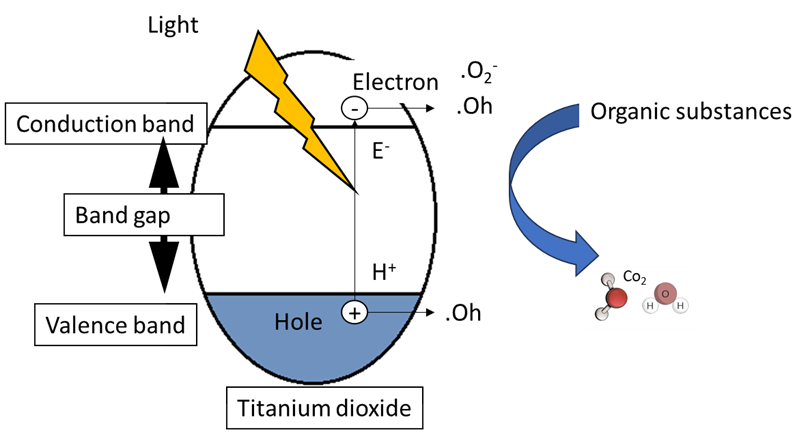
Photocatalytic coatings are advanced surface treatments powered by light-activated materials like titanium dioxide, which generate reactive radicals that can break down harmful microbes and pollutants, helping surfaces stay cleaner for longer. Titanium dioxide (TiO₂) is an effective and widely used photocatalyst activated by light to produce reactive radicals, and it can be used to treat air and water. Photocatalysts can be applied under any conditions, since they are not used up in the reaction, thereby minimizing chemical waste. In essence, these coatings harness light to trigger powerful chemical reactions that continuously purify and protect surfaces from a wide range of contaminants.
Deposition Methods and Applications
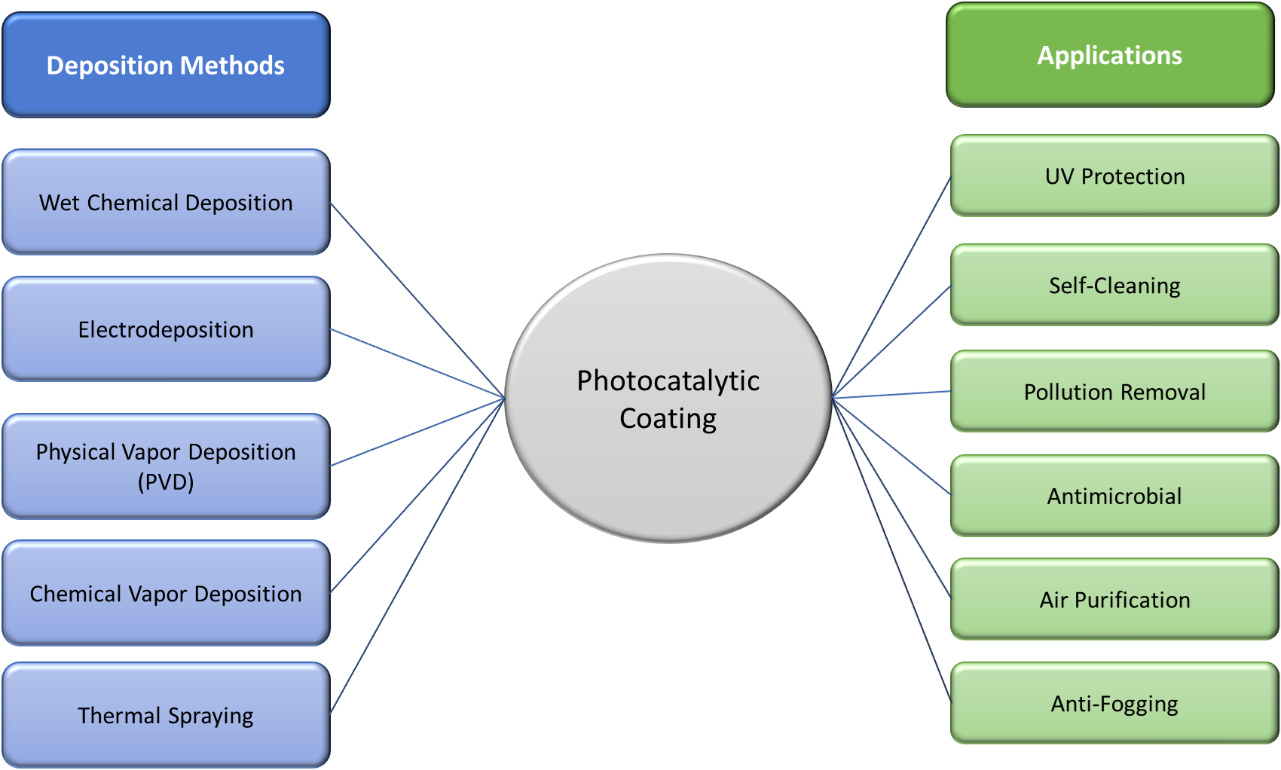
Other than TiO₂, there are different types of photocatalytic coating materials, including zinc oxide (ZnO)-based coatings, metal-doped photocatalyst-based coatings and carbon-based photocatalyst coatings, which offer various functionalities and applications through different deposition techniques. The figure below shows the different types of photocatalytic coating deposition techniques and applications:
Evolution of Photocatalysts
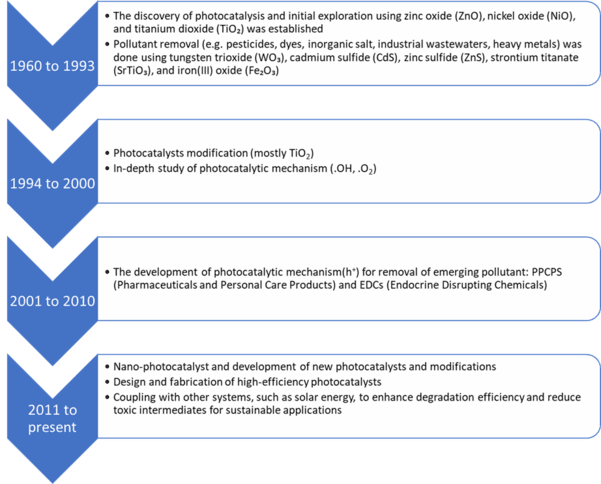
The timeline of photocatalyst research and development is described in the list and the figure given below:
- 1960s–1993: This time frame encompasses discovery, development and early research into photocatalysis with materials including ZnO, nickel oxide (NiO) and TiO₂. Research was in its infancy and focused mainly on applications for the removal of pollutants, including pesticides, dyes, inorganic substances, metals and industrial waste, using ultraviolet-light-responsive photocatalysts.
- 1994–2000: Research moved to predominantly fundamentals of photocatalytic reaction mechanisms with an increased understanding of reactive radicals (e.g., OH and O₂⁻). Some research was performed to modify TiO₂.
- 2001–2010: During this period, research expanded into visible-light photocatalysis with new photocatalysts and modified surfaces being researched. The visible-light photocatalysis mechanism was investigated, and advanced research began on pollutants from pharmaceuticals, personal care products and endocrine-disrupting chemicals.
- 2011–Present: The recent timeframe is focused on design and fabrication of photocatalysts with better efficiency for both solar energy and environmental remediation. It involves the development of photocatalysts from advanced nanostructures or hybrid materials, while focusing on performance, stability and scalability.
Key Drivers of the Photocatalytic Coatings Market
- Environmental Sustainability and Regulatory Push: Stricter governmental regulation over air quality and emissions is pushing industrial sectors to consider more environmentally friendly TiO2-based photocatalytic coatings to diminish air quality pollutants.
- Need for Self-Cleaning and Low Maintenance: High demand for materials and coatings that provide resistance to dirt, resist the growth of microorganisms and minimize cleaning costs is trending in the construction, transportation and healthcare sectors.
- Technological Advances: Breakthroughs in nanostructured TiO₂ coatings, combined with data-driven material design using artificial intelligence, are paving the way for more efficient and versatile applications across industries.
- Concerns About Urban Pollution and Indoor Air Quality: Increased smog, emission of volatile organic compounds and health-related issues surrounding indoor air quality (which sometimes is poor because of reduced air quality outside) are driving the demand for photocatalytic coatings in commercial and residential structures and in residential, office and common spaces.
Barriers to Commercial Adoption
- Low-Light Performance Limitations: Many photocatalysts, specifically TiO₂, are exceedingly reliant on UV, with low efficiencies during indoor lighting or overcast days, making it very unlikely to gain traction for wider suitability.
- Durability and Maintenance: Long-term durability is affected by environmental impacts, including UV intensity, humidity and dust, particularly when a cleaning or reapplication scenario may be necessary.
- Regulatory and Safety: Concerns regarding long-term release of nanoparticles and the associated environmental toxicity have resulted in the requirement for costly regulatory compliance testing for photocatalytic coatings, increasing costs to manufacturers and industries, while slowing down the commercialization process.
Future Outlook: The Next Decade of Photocatalytic Coatings
Photocatalytic coatings have developed from early self-cleaning glass and air-purifying paints into practical solutions that address real environmental and health challenges. Enhanced performance and durability can be achieved through numerous advances with visible-light-active catalysts, doping, heterostructures and nanostructured TiO₂ on durable substrates. Presently, the fields that have experienced the greatest success utilizing photocatalytic coatings are self-cleaning surfaces and air purification applications, which can degrade pollutants and deactivate infectious pathogens. Advances in emerging methodologies, such as computational design, density functional theory modeling and artificial intelligence-guided materials discovery and characterization of catalysts that enhances sensor technology, will support new materials beyond TiO₂ that are more stable and have functional activity.
Conclusion
The photocatalytic coatings market is expected to grow rapidly, as visible-light‐responsive materials gain more traction, smart‐city applications grow in scale and global air‐quality regulations tighten. For the wider adoption of photocatalytic coatings in urban infrastructure, healthcare and smart buildings, challenges such as fabrication cost and improving degradation activity and stability must be addressed. This can be achieved using AI-guided methods that improve utilization and reduce maintenance costs.
Need custom marketing data, insights, or further details? Reach out to us at info@bccresearch.com
BCC Library Membership Benefits
Unlimited Access to Market Research Reports for Academic Institutions and Corporations.
Custom Research
Tailored solutions across industries for your unique business needs.
MEMBERSHIP
Members get unlimited category or collection access, plus exclusives, events and discounts.
EXPLORE BENEFITSCUSTOM MARKET RESEARCH
Why go off-the-rack when you can go bespoke? Custom projects can be researched to match your unique needs.
FIND OUT MORE