

Hospital Stretchers Market
Expert guidance to accelerate your market and strategy decisions.
Introduction
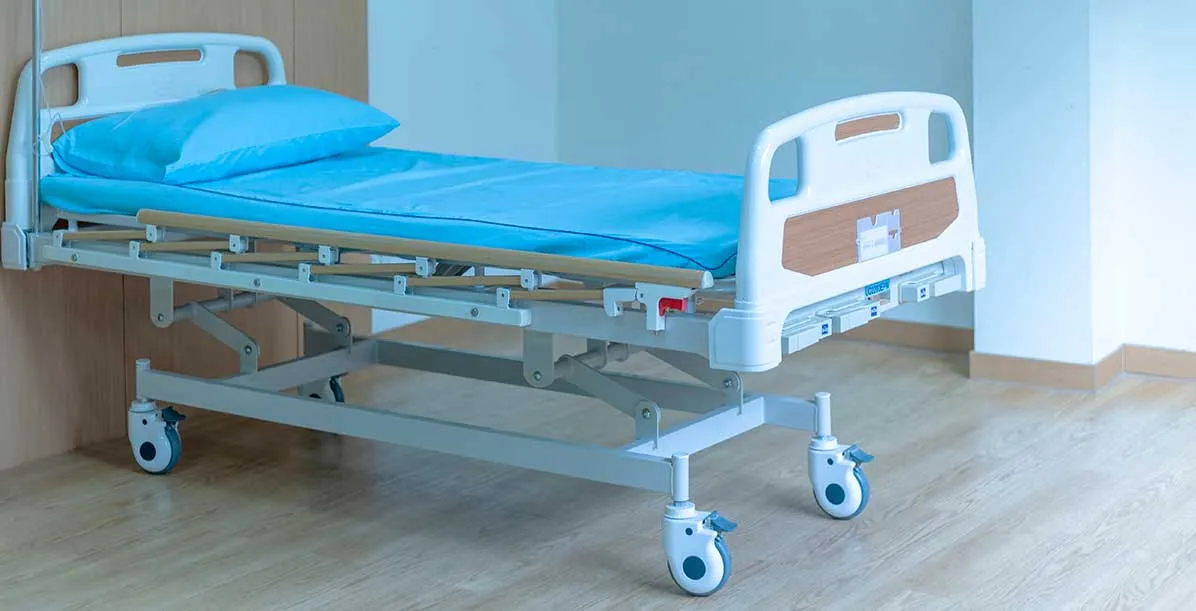
A hospital or medical stretcher is a specialized device designed to safely transport injured or critically ill patients both within and outside healthcare facilities. Patients experiencing cardiac events, elderly individuals, surgical cases, trauma and accident victims, patients with neurological or respiratory disorders, and those prone to psychiatric episodes or seizures require stretchers at any stage of hospital care. Stretchers that can move patients securely and gently are essential to prevent additional injuries when patients are already in distress.
Evolution
In the 14th century, wooden poles and hides developed into structured wooden frames that were used as stretchers during ancient civilizations in France. Later on, lightweight, terrain-appropriate designs for mountain rescue laid the groundwork for today's specialized, contemporary hospital stretchers. In 1910, Joseph Bomgardner developed the four-wheeled stretcher, paving the way for modern stretchers.
Current Market Trend
Stretchers have seen major advancements with the development of artificial intelligence and advanced technology. Every year, about one million patients in the U.S. suffer injuries due to falls in hospitals, placing a burden on care teams and increasing costs per injury. Managing bed exit alarms is becoming increasingly challenging due to the growing patient load and a shortage of personnel. Modern stretchers offer vital fall protection in hospital environments, which can help reduce the incidence of these costly falls. Comfortable braking systems, automated height controls, enhanced mobility and monitoring systems with sensors to capture vital signs and promptly alert medical professionals to anomalies are all features of contemporary stretchers. Companies in the market are developing smart stretchers that can wirelessly transmit patient data, connect to nurse call systems, and provide both visual and audio alerts for bed exits.
Key Developments
- The U.S.-based emergency medical equipment manufacturer Ferno International introduced the Power X2 Ambulance Cot to the market. The stretcher system includes automated loading and powered height adjustment features, reducing the need for manual lifting. The stretcher features a new fastening system that maintains patient safety while reducing the physical strain on responders. The product features power-assisted functionality and a design that promotes user comfort. (August 2025)
- India-based ambulance stretcher manufacturer Satpuda Engineering produced 12,000 GoRill ambulance stretchers for domestic use in India. The production of these emergency stretchers in India supports both the “Make in India” initiative and the development of domestic medical solutions, while reducing import dependence. (August 2025)
Companies in the Hospital Stretcher Industry
Several international and local companies offer hospital stretchers worldwide, resulting in a fragmented market. Below are some of the top companies, their products, benefits and strategic innovations.
|
Company Name |
Products and Benefits |
Strategic Innovations |
|
Stryker |
Power-PRO XT ambulance stretcher, Prime Series hospital stretchers, Gynnie stretcher. The stretchers' battery-operated hydraulic lift, bed-exit alarms, nurse call integration, automated fastener shut-off and wireless data sharing ease carer stress while improving patient monitoring. |
To increase access to healthcare, the company maintains a long-standing partnership with Project C.U.R.E. and donates hospital and clinic equipment to more than 135 countries. Nearly all of Project C.U.R.E.'s 161 shipments to 36 countries in 2024 alone included Stryker equipment, benefiting 198 healthcare facilities. |
|
Ferno |
The company offers a range of flexible stretchers, as well as emergency, transport, and mortuary stretchers. Adaptable stretchers for restricted areas, mortuary stretchers for transfers, scoop stretchers for immobilization, and lightweight, secure and stable designs created for specific situations. |
In March 2025, Vigour Med Store in the United States partnered with Ferno as an authorized reseller of its products. A wide variety of Ferno's patient transport and emergency medical equipment, including ambulance cots, rescue devices, emergency stretchers, and other associated items, will be available at Vigour Med Store as a result of this partnership. The goal is to provide medical suppliers, emergency responders, and healthcare professionals with access to high-quality, life-saving solutions at competitive prices, along with specialized support for large and business-to-business orders. Some of the emergency medical services (EMS) products include Power X1, Power X2 Ambulance Cots, and the iNTRAXX integrated vehicle system. |
|
Baxter International (Hillrom)
|
The company offers Hillrom procedural and transport stretchers, including the P800 Procedural Stretcher. Low-height design, 500-lb weight capacity, spring-loaded Steering Plus system for easier manoeuvring, and shock absorption for smoother transport. |
The company offers patient lifts, precision positioning table, stretchers, accessories, and slings through its subsidiary, Hillrom. The company is strategically driving innovation in connected care by integrating advanced digital technologies across its portfolio, including smart beds, infusion systems, and monitoring solutions, with a focus on enhancing patient outcomes and expanding into high-growth markets. It is now extending this expertise into next-generation stretcher systems. |
|
Arjohuntleigh (Arjo) |
Stretchers & Trolleys portfolio (for hospital wards, Operating Rooms, and recovery). Emphasis on ergonomic build, safe patient handling, and caregiver protection during lateral or vertical transfers. |
In April 2025, Arjo launched the Maxi Move five-patient floor lift, featuring Motion Assist and Powered Dynamic Positioning, which reduces transfer effort by up to 68% compared to competitors. This move strengthens Arjo’s leadership in patient handling (a category accounting for approximately 26% of its 2024 sales) by offering enhanced caregiver safety, improved workflow efficiency, and differentiation in the stretcher/transfer equipment market. |
|
LINET Group |
Sprint series, including the Sprint 200 transport stretcher The stretcher has a premium ergonomic design, a lightweight build, reduced push force, safety features, and advanced materials for performance and durability. |
LINET Group has acquired the French company Domalys, a manufacturer of furniture and smart technologies for fall prevention, to strengthen its position in the hospital and home care segments. |
|
Medline |
Talon II Model 90C, MAC Medical Transport Stretchers, Multipurpose Stretcher Chairs. Offering both basic transport stretchers and dual-use chair-stretchers for versatile hospital applications, customizable widths and surfaces to match clinical needs. |
Medline is planning to pursue a USD 4000 – 5000 million IPO by the end of 2025. The company has signed a multi-year Prime Vendor agreement with Powers Health, expanding its service capabilities and distribution network. |
|
SAVION |
Patient trolleys and stretchers for paediatric use, ophthalmology surgery, emergency transport, isolation requirements, and motorised self-propelled stretchers. The stretchers provide strong twin-pedestal support with hydraulic/pneumatic adjustments for effortless positioning, offering versatile functions such as tilt, knee gatch, and x-ray decks for varied clinical use. |
The company offers its hospital beds, medi-cruiser, patient trolleys, patient lifters, stretchers, and other products in over 30 nations. The company offers a strong portfolio with more than 20 marketed stretchers. Some of the stretchers are the C-Arm trauma stretcher (Model EC 711CA), emergency and trauma stretcher (Model ES 710FF) and pediatric stretcher (Model PS410).
|
Future Outlook
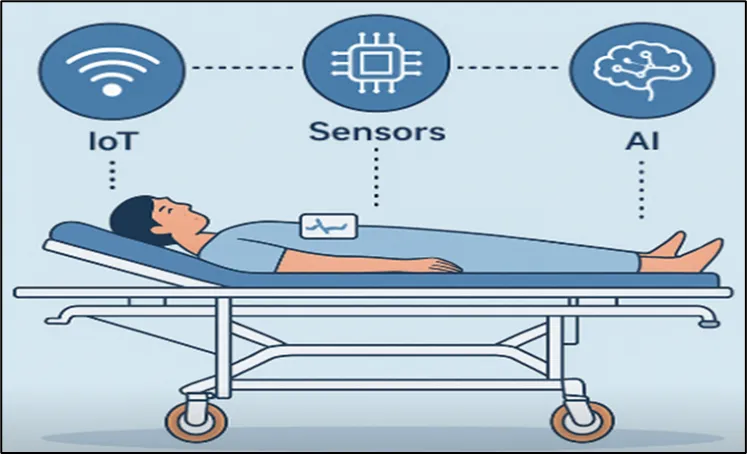
The next phase of stretcher innovation is centred on the creation of intelligent systems with embedded sensors and microcontrollers. These stretchers will enable continuous patient vital monitoring and provide prompt feedback to medical professionals by utilizing big data analytics and artificial intelligence, as well as integrating with Internet of Things (IoT) systems. These developments appear to guarantee prompt interventions, improve judgment and facilitate more effective, data-driven patient care.
Conclusion
The modern hospital stretcher now features advanced capabilities that integrate sensor technology with automated height control and enhanced mobility functions. The new technologies enable carers to perform patient transfers and monitoring tasks with greater speed and reduced physical strain, which enhances both their work efficiency and patient protection. The 2025 market for patient handling equipment has seen the introduction of two new performance benchmarks through the development of Arjo's Maxi Move 5 and Ferno's Power X2 power-assisted and ergonomic systems. The worldwide adoption of these products is driven by increasing research and development spending, local manufacturing growth, and Internet of Things connectivity. The healthcare industry shows a clear direction toward using data to create safer patient handling systems that deliver better results.