

Global Market for P.O.C. Diagnostics to Reach $19.3 Billion in 2018; United States Moving At 4.9% CAGR
May 01, 2014
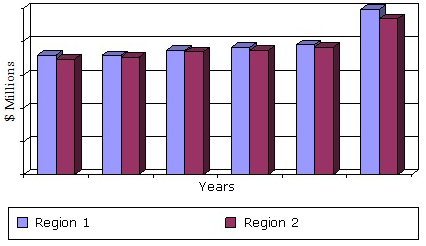
BCC Research (www.bccresearch.com) reveals in its new report, POINT OF CARE DIAGNOSTICS,the global market for point of care (POC) diagnostics is expected to grow to nearly $19.3 billion by 2018, with a five-year compound annual growth rate (CAGR) of 4.5%. The United States (U.S.) market, the fastest growing regional segment overall, is growing at a steady 4.9% CAGR.
Rising healthcare staffing shortages, technological advances, and increasing consumer demand and acceptance of POC technology is driving significant growth in the global POC diagnostics market. The U.S. market is expected to reach $9.9 billion by 2018.
The international market, which is projected to reach $9.3 billion and register a 4.1% CAGR, is being spurred by increasing need for the management of chronic diseases, improving access to healthcare, and a steadily improving global economy.
“Over the last decade, more diagnostic tests have been performed at patients’ bedsides in hospitals, in physicians’ office laboratories, outpatient clinics, emergency rooms, and intensive-critical-care units," says BCC Research healthcare analyst Melissa Elder. “The wider availability of POC testing has revolutionized the continuum of the patient-care process by providing laboratory results rapidly and efficiently at these locations. The trend toward greater POC testing is driven by the faster diagnostic benefits it provides.”
POINT OF CARE DIAGNOSTICS provides an overview of the global market for POC diagnostics, including analyses of global market trends, with data from 2012 and 2013, and estimates and projections of CAGRs through 2018. The report discusses factors driving the market, such as staff shortages, older populations, long-term cost savings, and need for faster diagnosis and care. It also looks at how availability of POC testing has revolutionized the continuum of the patient-care process.

This report is intended for all the stakeholders of the near-patient diagnostic testing market, including diagnostic test manufacturing companies, medical supply vendors, hospitals, physician offices and groups, development companies, and other involved participants.
Editors and reporters who wish to speak with the analyst should contact Steven Cumming at steven.cumming@bccresearch.com.
Point of Care Diagnostics( HLC043D )
Publish Date: Apr 2014
Data and analysis extracted from this press release must be accompanied by a statement identifying BCC Research LLC as the source and publisher. For media inquiries, email press@bccresearch.com or visit www.bccresearch.com/media to request access to our library of market research.
BCC Library Membership Benefits
Unlimited Access to Market Research Reports for Academic Institutions and Corporations.
Custom Research
Tailored solutions across industries for your unique business needs.
More in Health Maintenance
- Global Noninvasive Cancer Diagnostics Market to Reach $165.2 Billion by 2030 as Liquid Biopsy, AI-Enabled Screening and Multi-Cancer Detection Tests Transform Oncology
- Long-Term Care and Home Healthcare Technology Market to Reach $64.8 Billion by 2030 as Aging Demographics and Remote Monitoring Reshape Care Delivery
- Thermo Fisher Scientific Inc.: BCC Research Releases Comprehensive 360° Company Analysis
- Healthcare Predictive Analytics Market to Grow at 24.7% CAGR Through 2030
- mHealth Technologies Market Poised for 17.1% CAGR Growth Through 2030
Reports from Health Maintenance
Recent News
- Biometrics as a Service in Medical Devices to Reach $2.7 Billion by 2030, Driven by Remote Patient Monitoring Demand
- Protein Synthesis Research Market to Reach $42.8 Billion by 2031, Driven by Surging CGT Investment
- AI and Advanced Diagnostics Transform Cancer Detection Market Amid Rising Healthcare Investment
- Global Bispecific Antibodies Market to Reach $22.3 Billion by 2030 as Immuno-Oncology Innovation and R&D Investment Accelerate
- Cloud Computing in Cell Biology, Genomics and Drug Development to Reach $15.6 Billion by 2030 as Biological Data Explosion Drives Demand